Governance
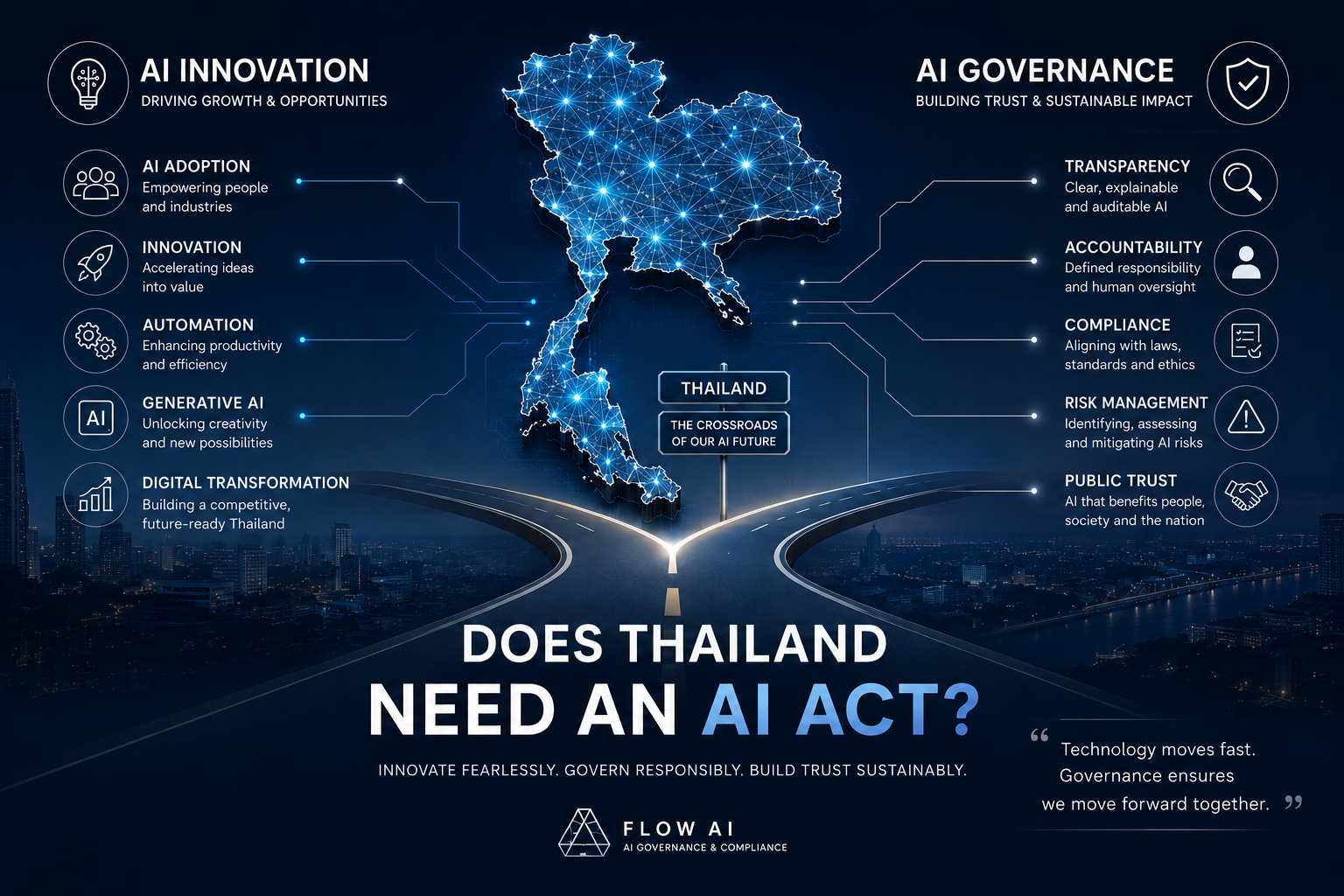
Does Thailand Need an AI Act?
As AI adoption accelerates in Thailand, should the national conversation move beyond access and skills toward clearer AI governance, accountability, and regulation?
Read ArticleINSIGHTS
Insights and executive perspectives on governance, compliance, technology law, and the responsible adoption of emerging technologies—with artificial intelligence as the current priority domain.
EXPLORE BY CATEGORY
ALL INSIGHTS
Compliance
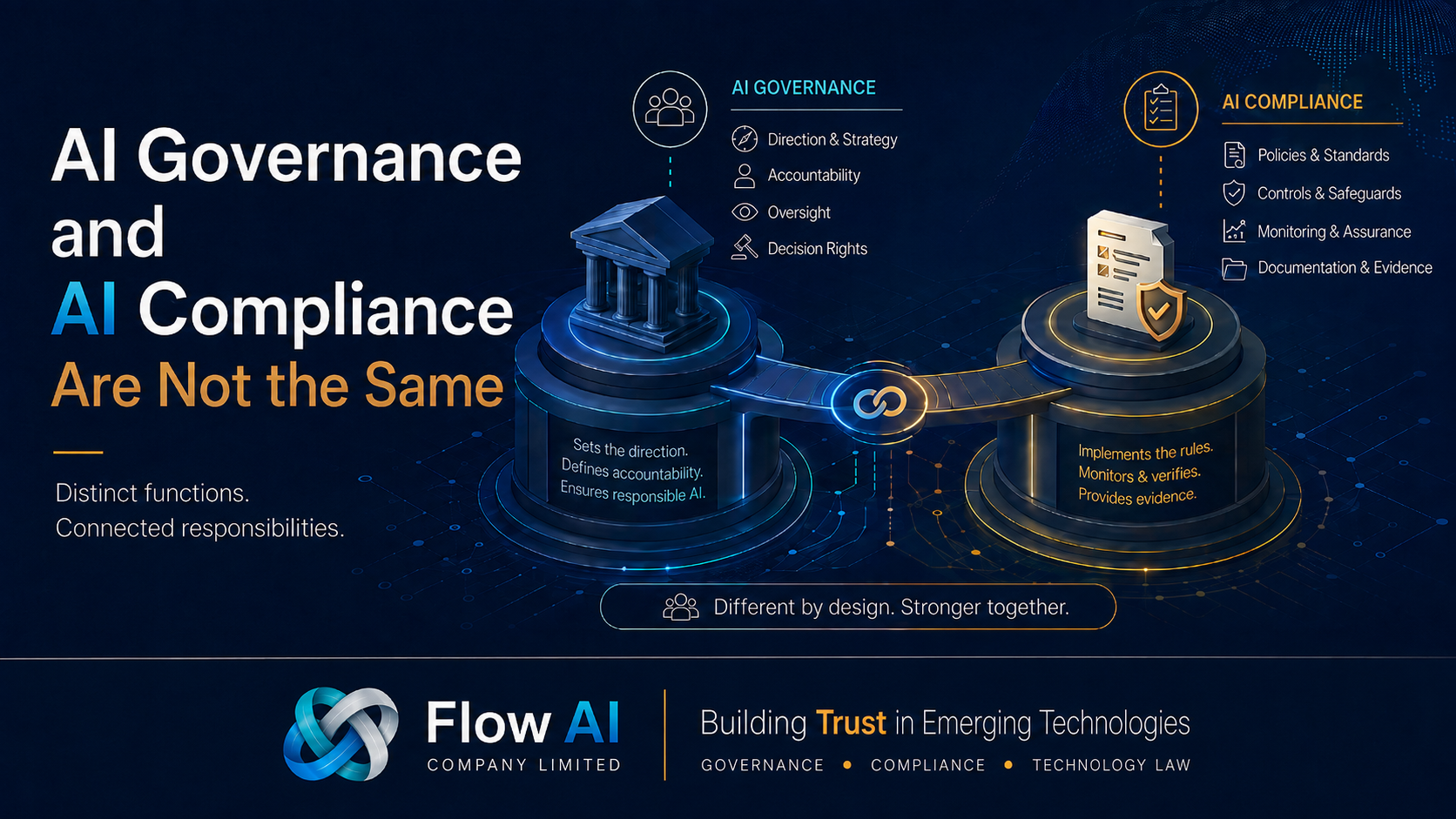
AI governance and AI compliance are closely connected, but they perform different organizational functions. Governance sets direction and accountability, while compliance translates those expectations into controls, monitoring, documentation, and evidence.
Governance
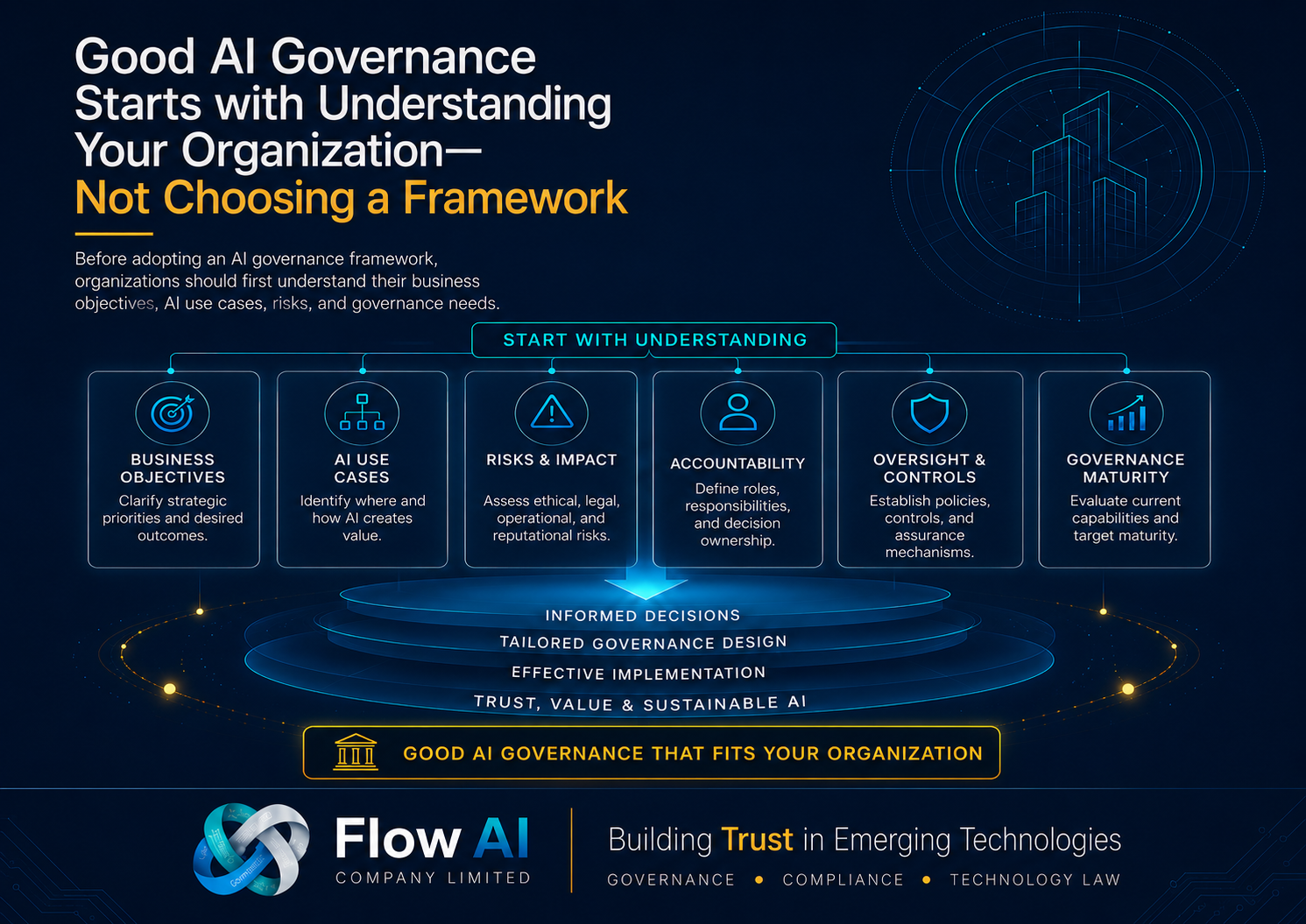
Before adopting an AI governance framework, organizations should first understand their business objectives, AI use cases, risks, accountability, and governance needs. Good AI governance should be risk-based, context-specific, and proportionate.
Governance
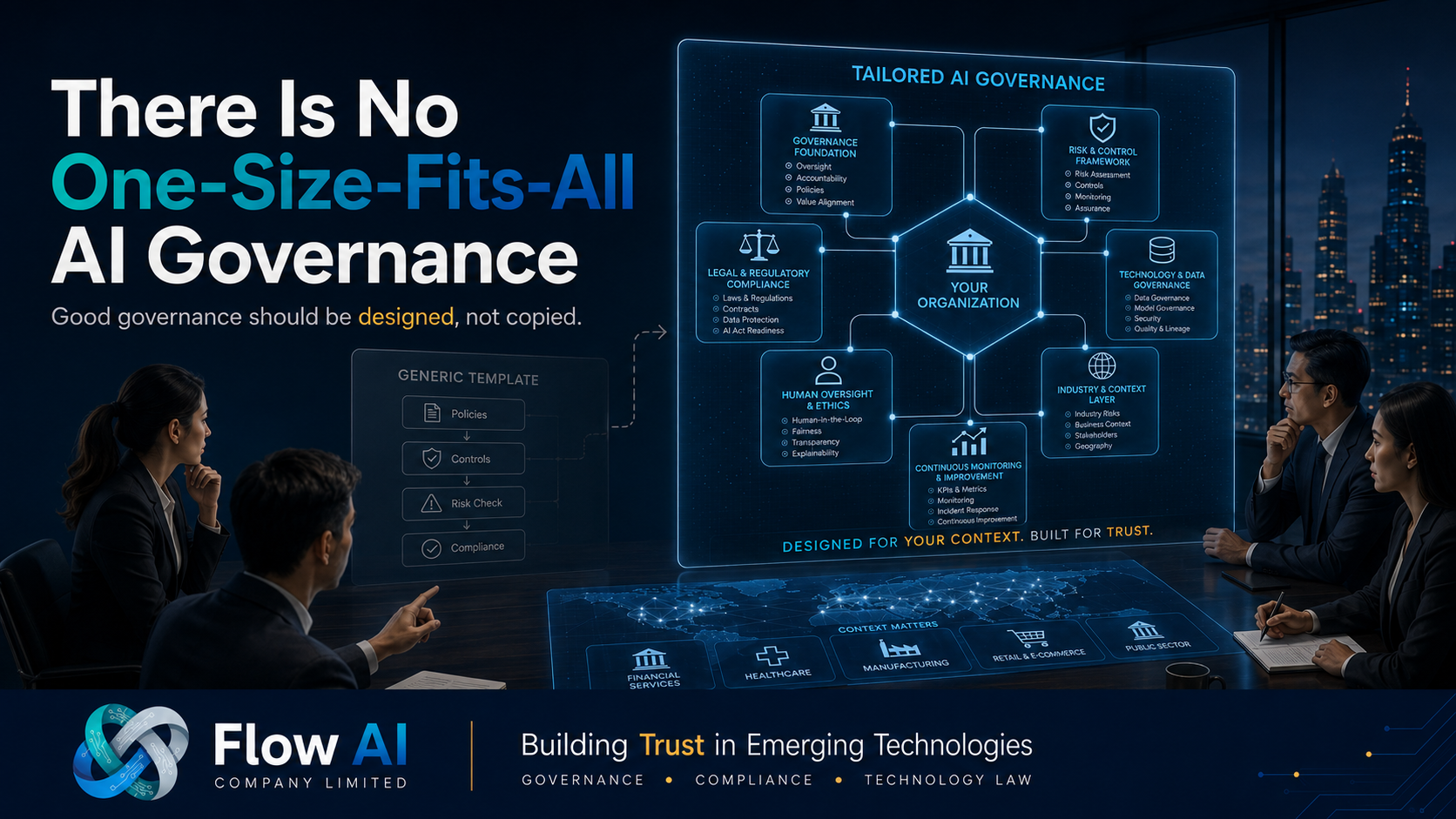
There is no one-size-fits-all approach to AI governance. Good governance is not created by copying another organization’s framework, but by designing practical controls that fit the organization’s real risks, context, and responsibilities.
Governance
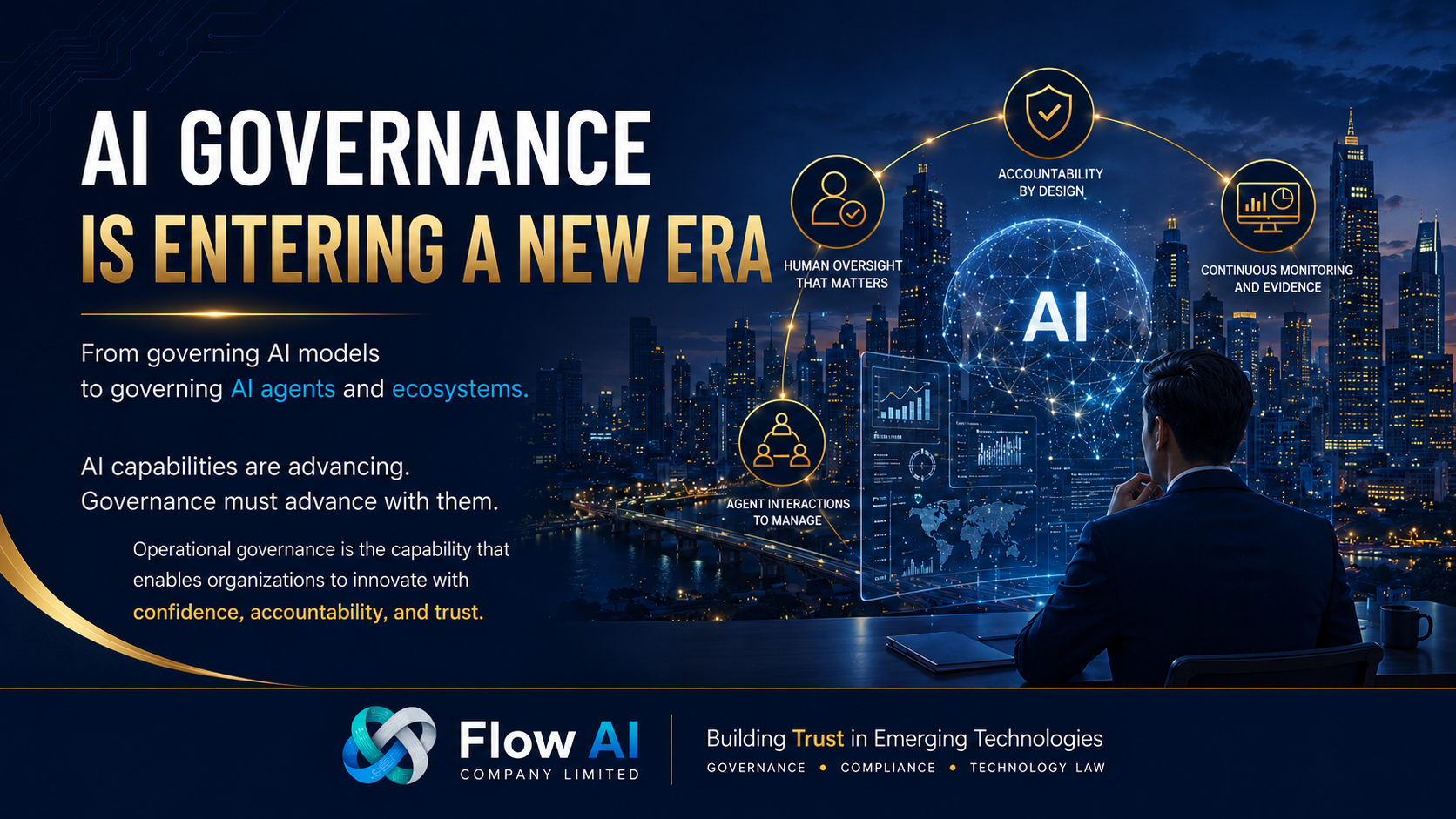
AI governance is evolving from governing individual AI models to governing increasingly autonomous AI agents. Organizations will need stronger operational governance, human oversight, and continuous monitoring to manage this next stage responsibly.
Leadership & Strategy
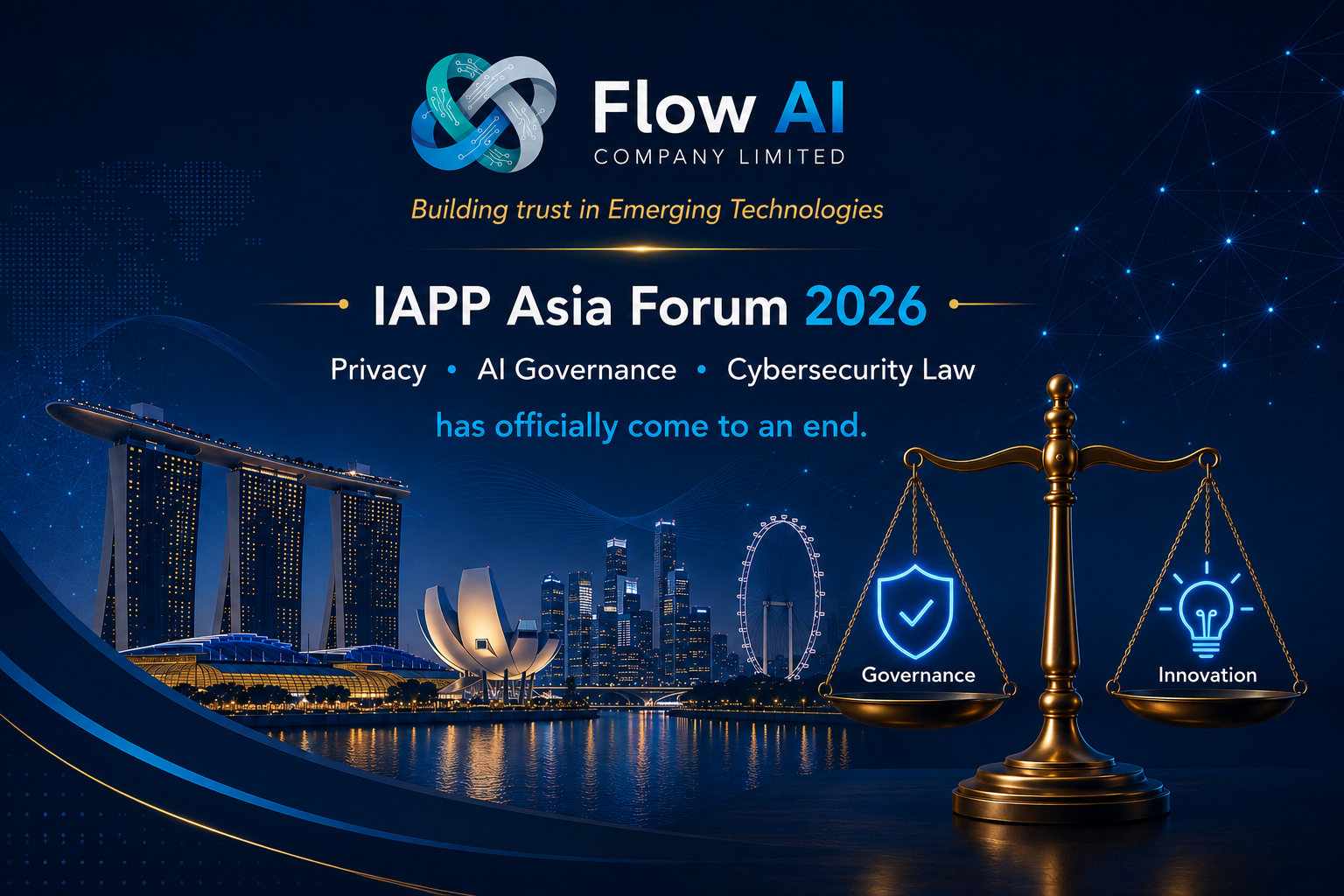
IAPP Asia Forum 2026 reinforced that AI governance is becoming a strategic capability. The challenge is not simply compliance, but balancing accountability, trust, and innovation as AI adoption accelerates.

Leadership & Strategy
On the second day of IAPP Asia Forum 2026 in Singapore, Flow AI explored how regions and organizations are shaping AI governance through discussions on APAC policy, trusted AI ecosystems, liability for autonomous AI, and employee trust in AI-powered workplaces.

Leadership & Strategy
Flow AI joined IAPP Asia Forum 2026 in Singapore to explore how AI governance is evolving across the Asia-Pacific region, including autonomous AI agents, AI risk management, agentic AI security, and trustworthy AI in healthcare.
Governance
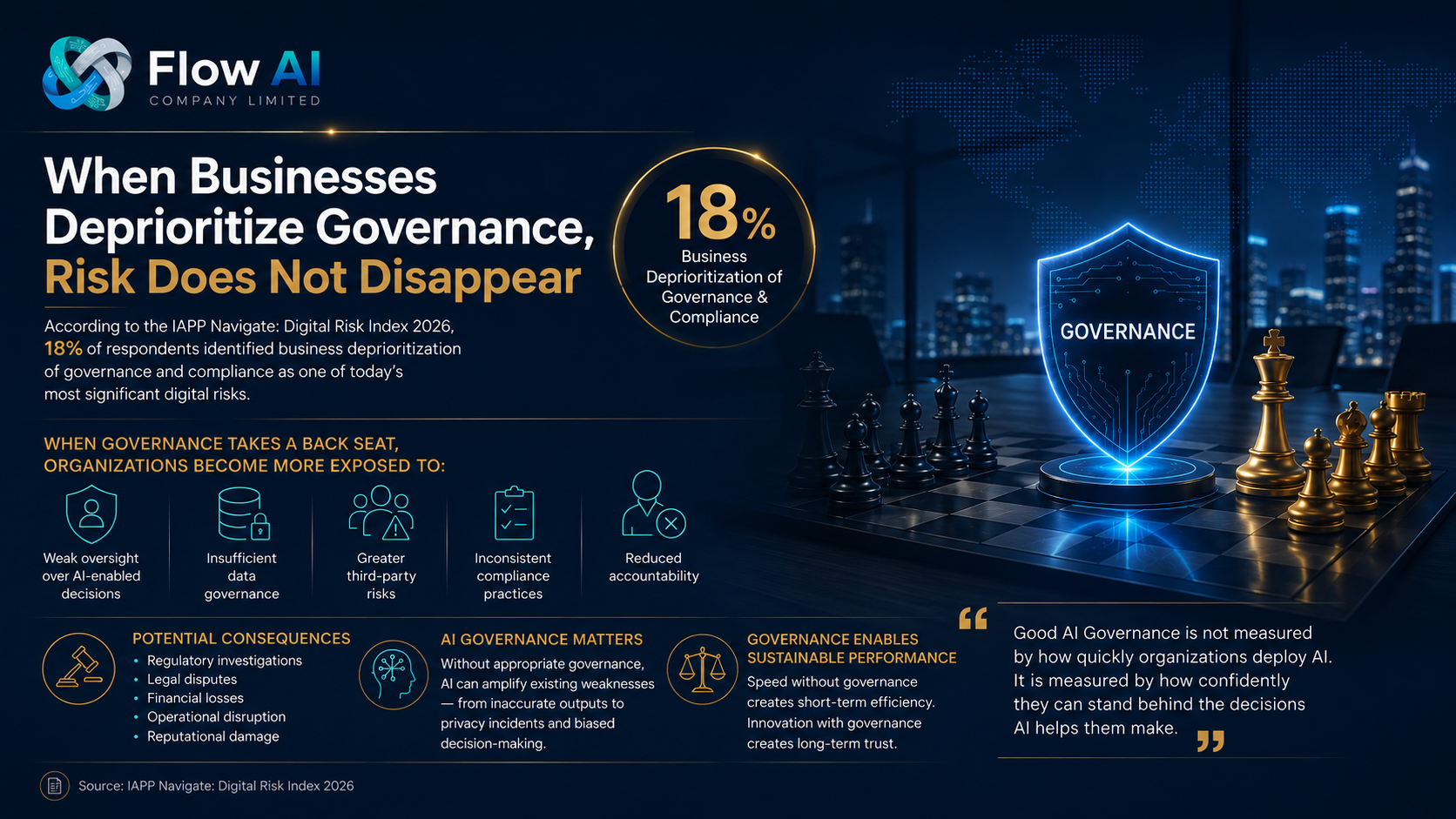
When businesses deprioritize governance and compliance, risk does not disappear. It accumulates through weaker oversight, reduced accountability, insufficient data governance, and greater exposure to AI-related and operational failures.
Governance
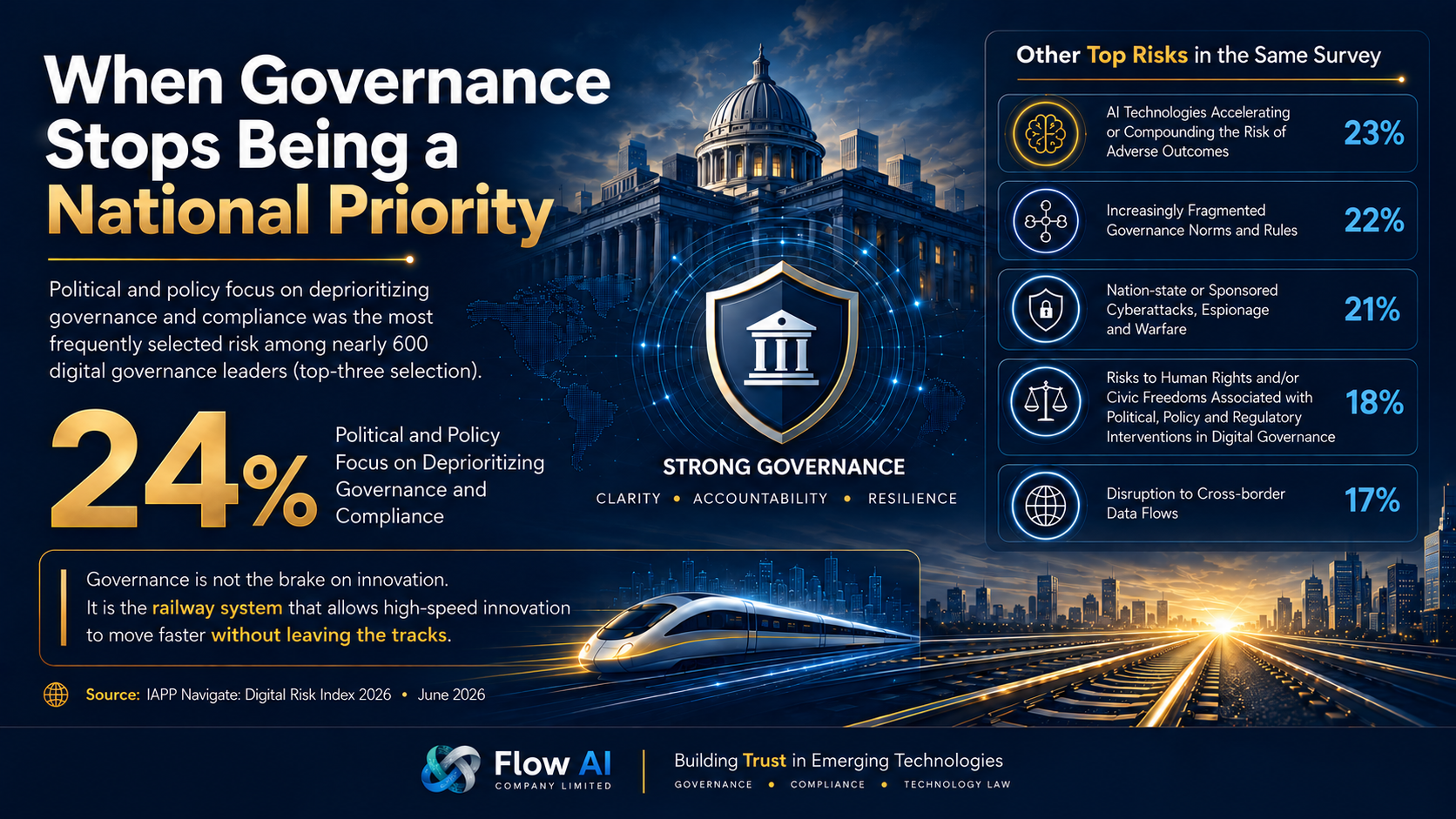
When governance is deprioritized at the policy level, digital trust and ecosystem resilience begin to erode. As AI advances, strong governance becomes even more essential—not less.
Discuss your organization’s governance, compliance, or technology-law with Flow AI.
Request a Briefing