
Governance
Does Thailand Need an AI Act?
As AI adoption accelerates in Thailand, should the national conversation move beyond access and skills toward clearer AI governance, accountability, and regulation?
Read ArticleINSIGHTS
Insights and executive perspectives on governance, compliance, technology law, and the responsible adoption of emerging technologies—with artificial intelligence as the current priority domain.
EXPLORE BY CATEGORY
ALL INSIGHTS
Compliance
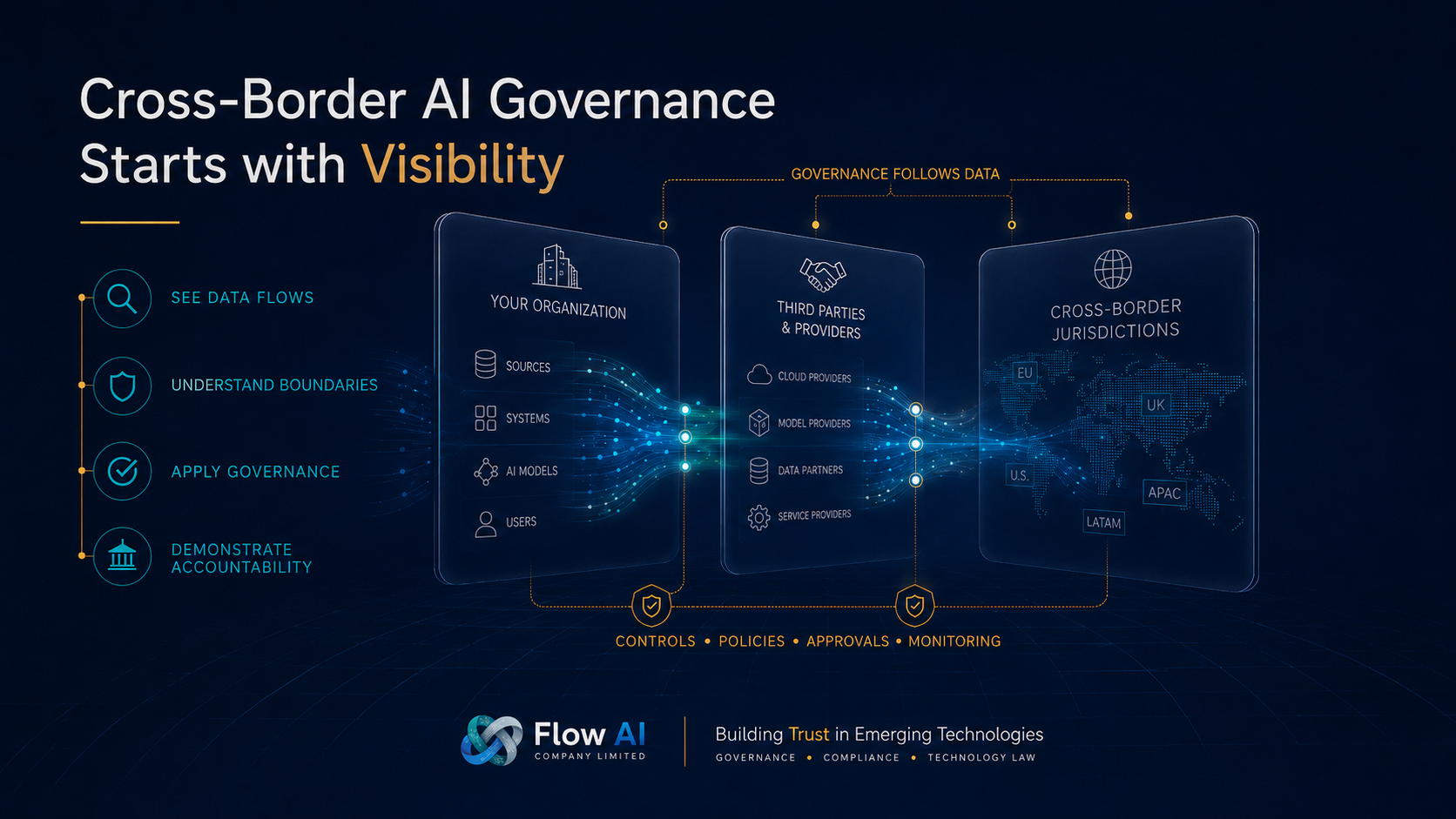
Cross-border AI governance starts with visibility into data flows, third parties, processing locations, and jurisdictions so organizations can apply appropriate controls and accountability.
Governance
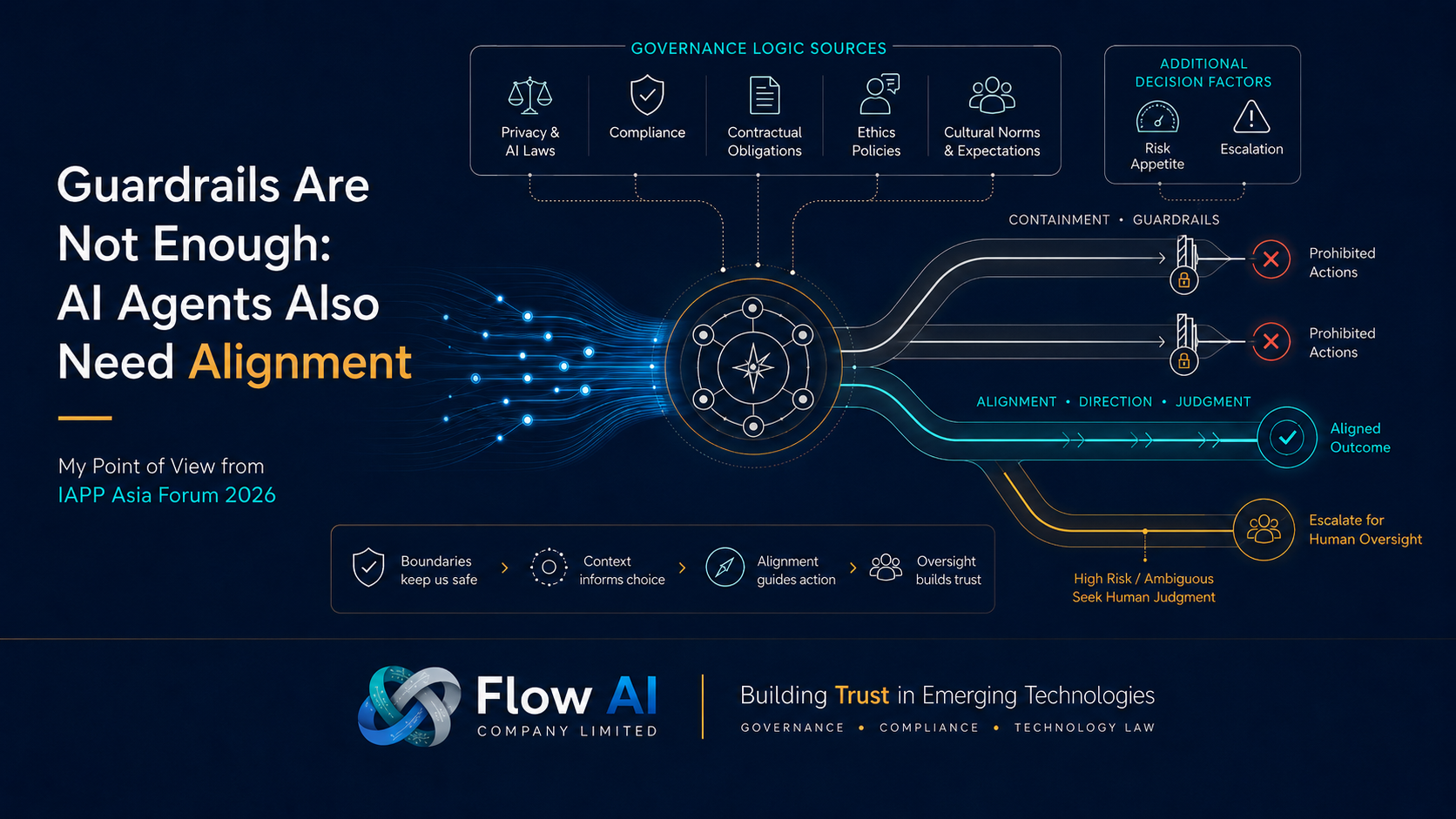
Guardrails define what AI agents must not do. Alignment helps them decide what they should do when multiple actions are permitted but only some fit organizational expectations.
Governance
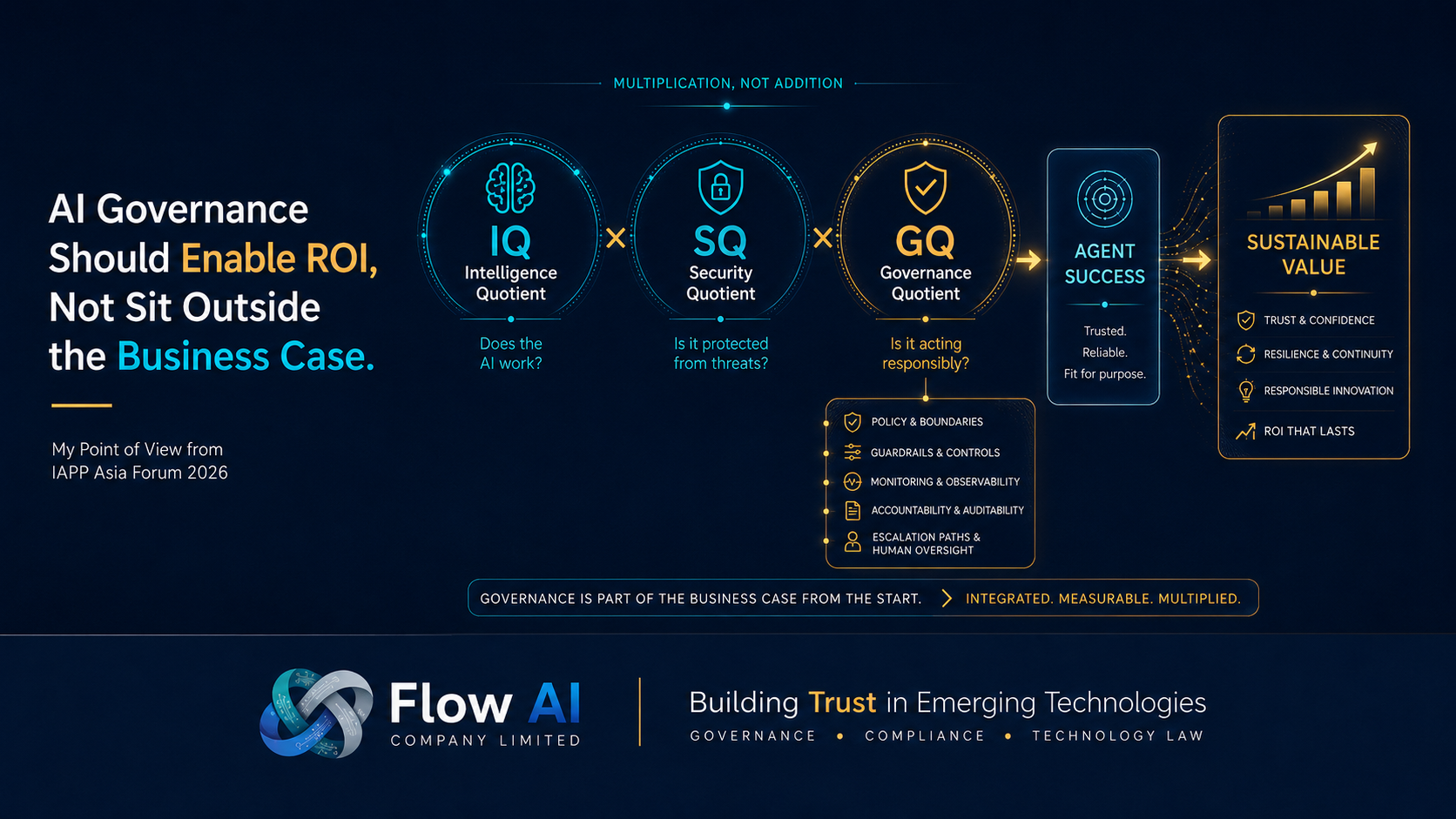
AI governance should not be treated as a barrier to innovation. It should be built into the business case to help protect value, trust, resilience, and sustainable ROI.
Governance
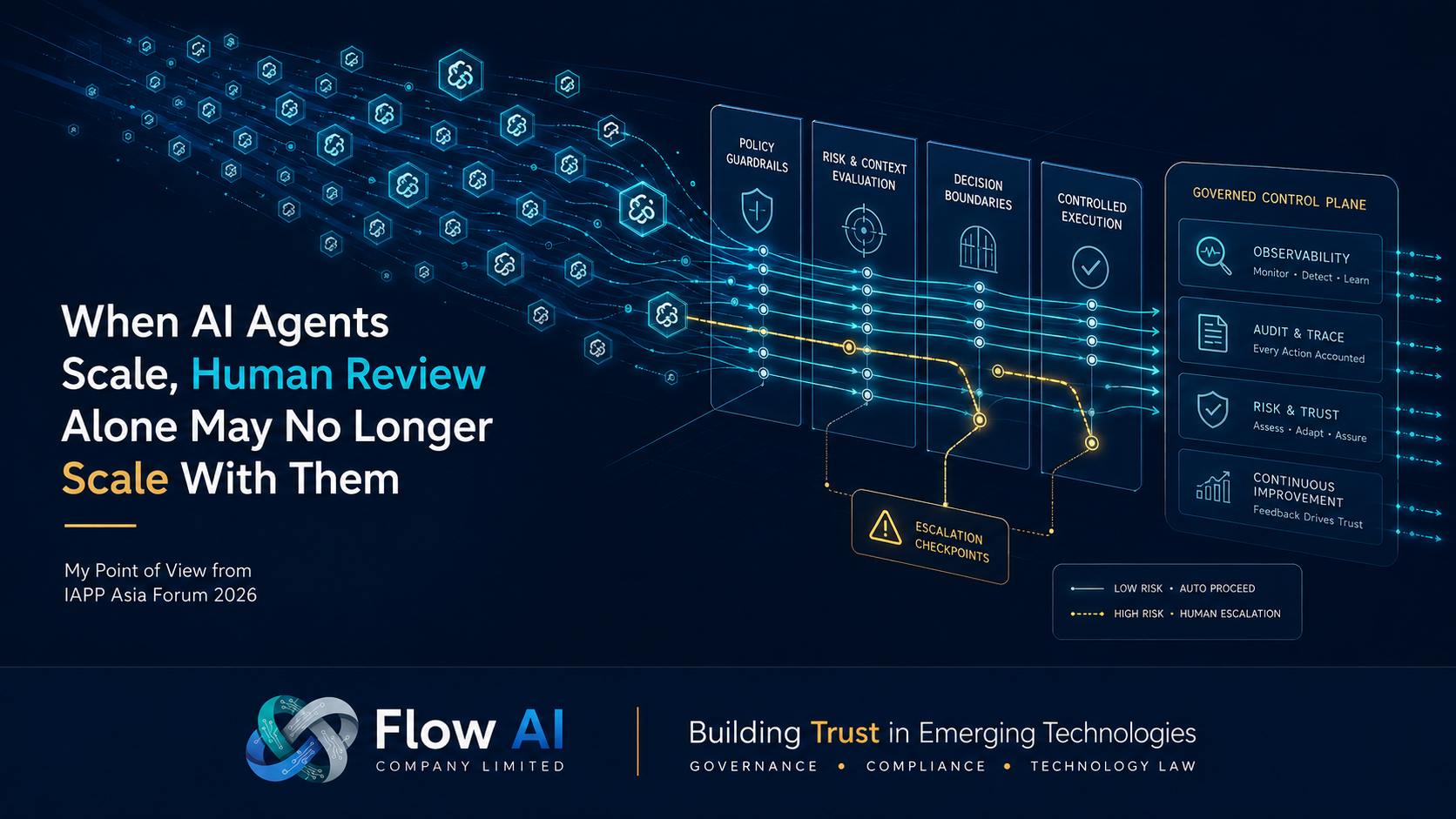
As AI agents operate at greater speed and scale, manual review cannot remain the primary control for every autonomous action. Governance must shift toward defined boundaries, continuous monitoring, risk-based escalation, and targeted human judgment.
Compliance
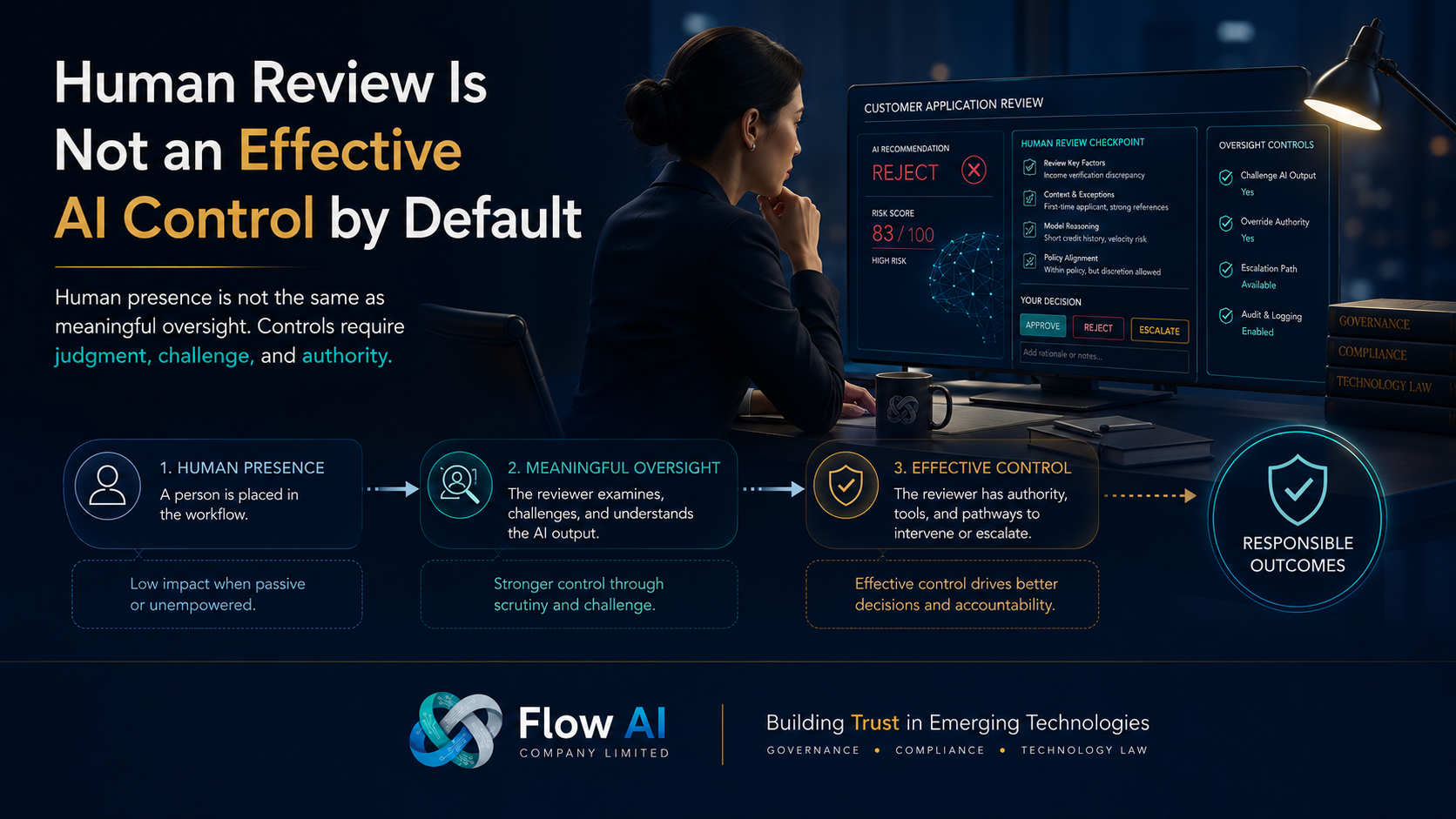
Having a human in the loop does not automatically create an effective AI control. Meaningful oversight requires judgment, authority, information, escalation pathways, and evidence that the control actually works in practice.
Compliance
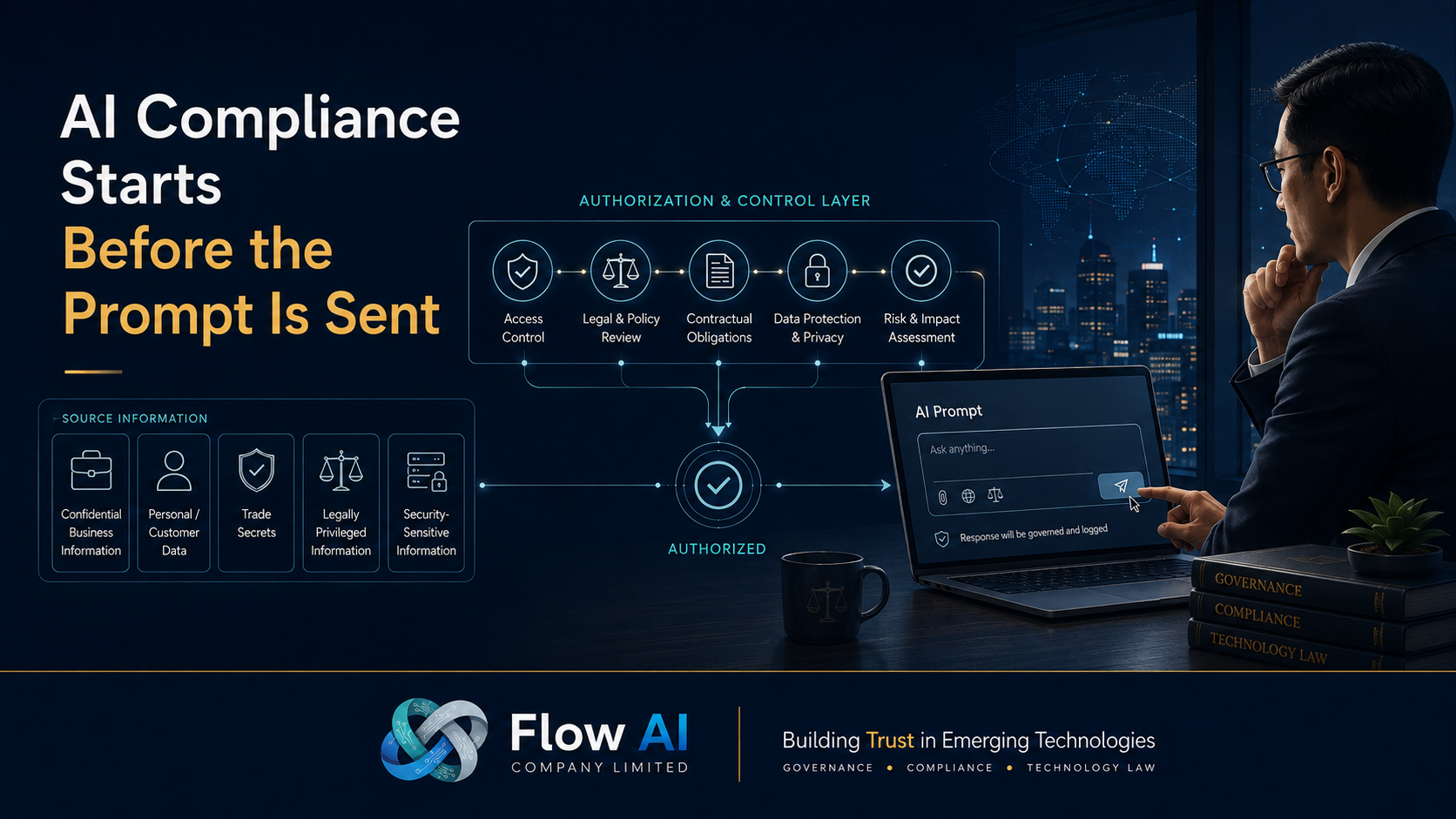
AI compliance begins before an AI system generates an output. Organizations need clear rules governing what information may be provided to which AI systems, for what purposes, and under what safeguards.
Compliance
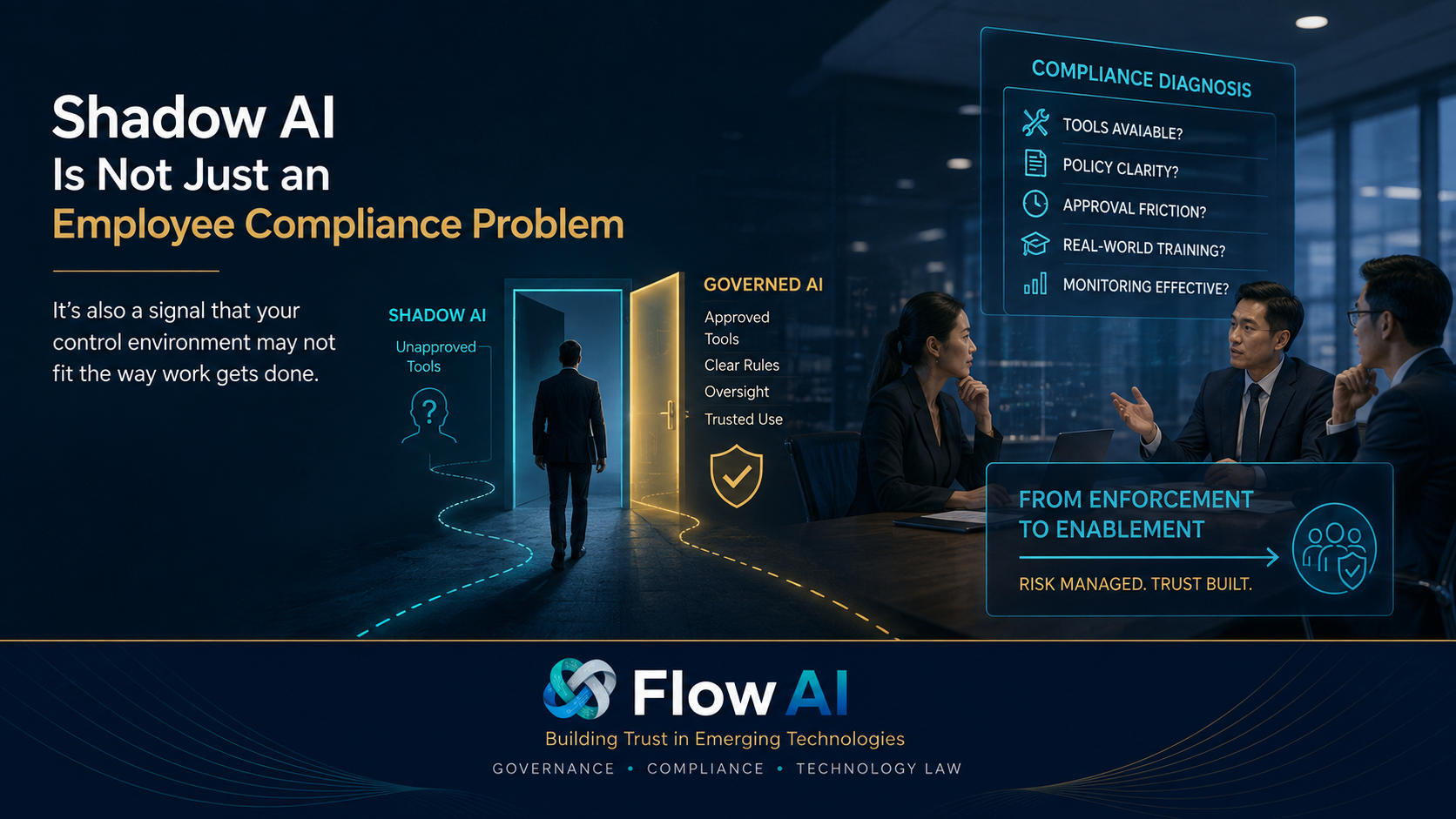
Shadow AI is not only an employee compliance issue. It can also signal that approved tools, policies, training, approval processes, or monitoring do not adequately reflect how work is actually performed.
Compliance
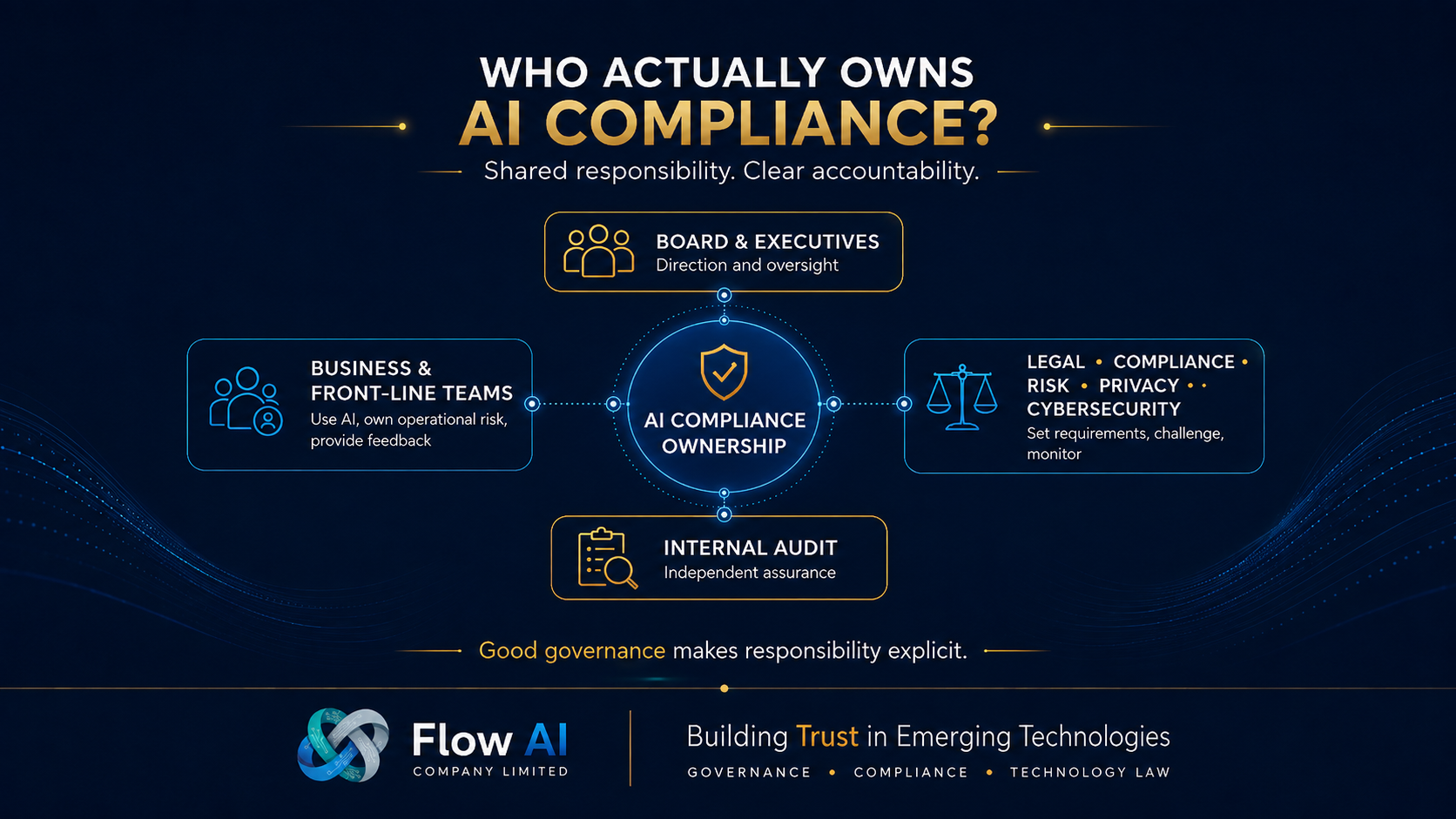
AI compliance should not default to one control function. Effective governance makes business ownership, oversight responsibilities, and independent assurance explicit across the organization.
Compliance
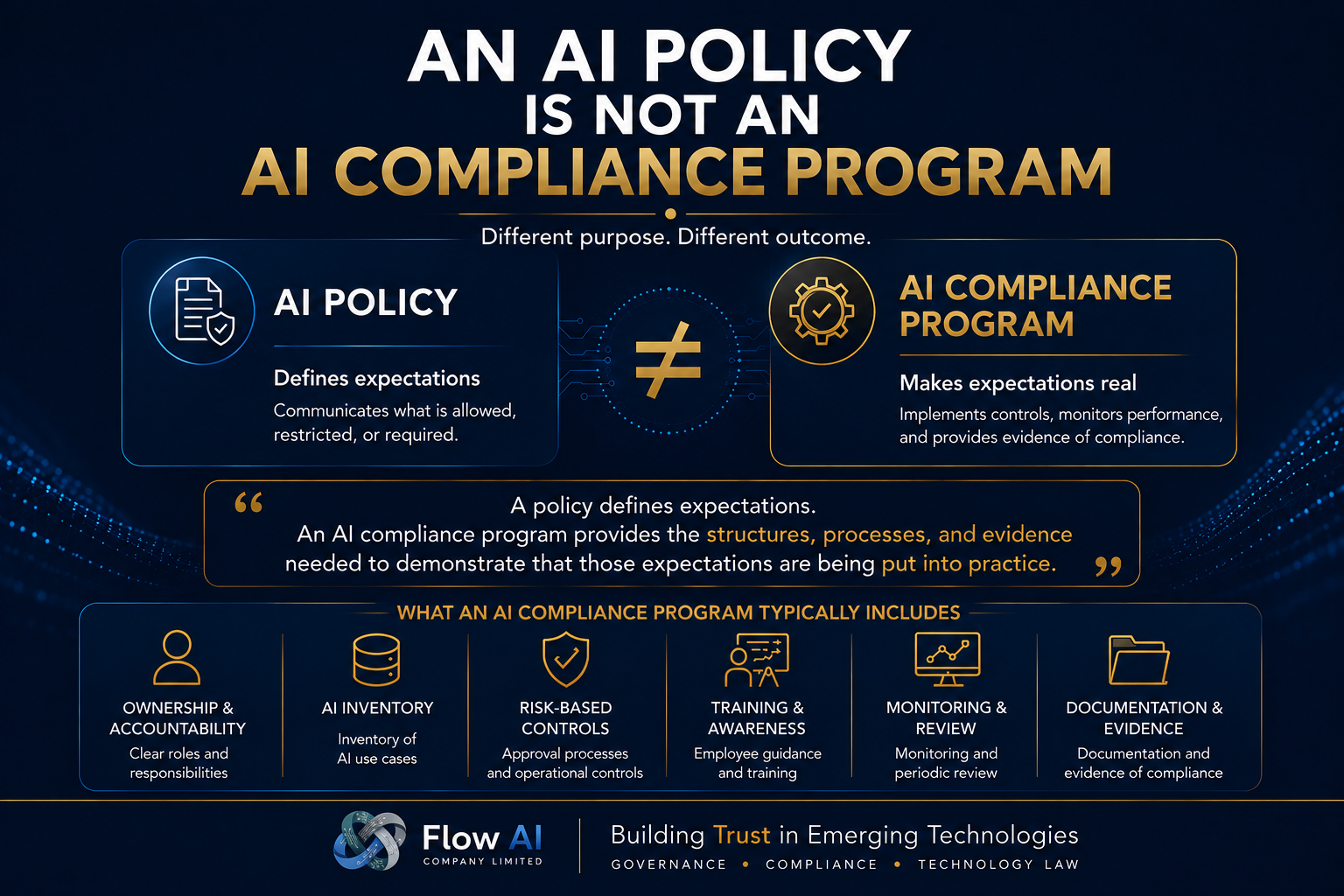
Publishing an AI policy does not mean an organization has an AI compliance program. A real program turns expectations into ownership, controls, training, monitoring, and evidence.
Discuss your organization’s governance, compliance, or technology-law with Flow AI.
Request a Briefing