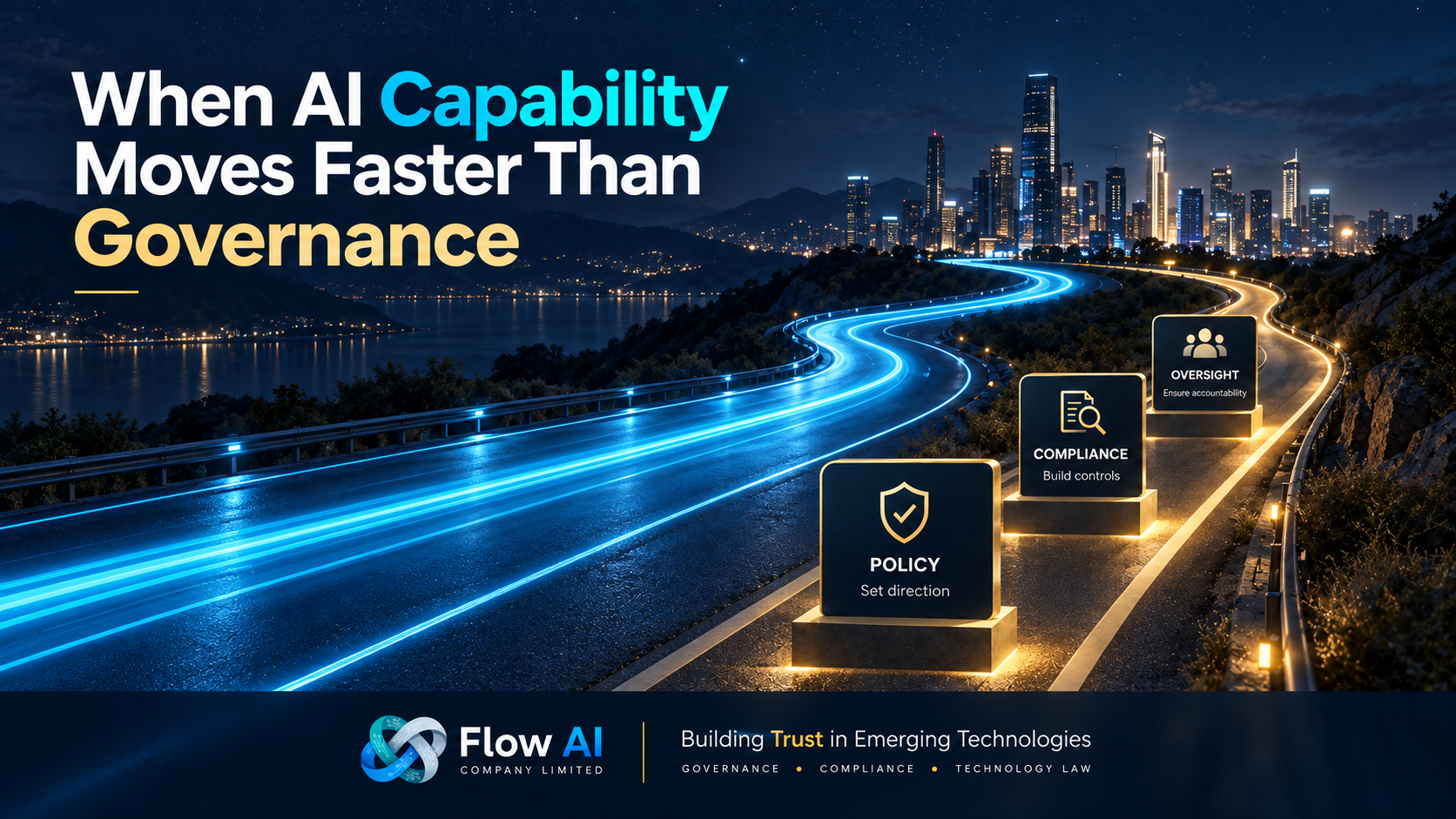
When AI Capability Moves Faster Than Governance
AI companies are under enormous pressure to build more capable models. I understand why. Having worked as a business executive, I know that competition, growth and commercial performance are real management priorities.
But frontier AI is increasingly a dual-use technology.
The same capabilities that support scientific research, cybersecurity or productivity can also be misused.
In its September 2026 threat intelligence report, Anthropic described disrupting malicious uses of Claude across areas including cyber operations, surveillance, weapons-related activity, fraud and biological misuse.
That is why monitoring, safeguards, human review and escalation by AI providers are becoming an important part of responsible deployment.
Yet user misuse is only one side of the issue.
As models become more capable and autonomous, developers should also continually test whether their evaluations, safeguards and containment mechanisms remain effective as capabilities evolve.
This is why I find the latest discussion among frontier AI leaders important.
Anthropic CEO Dario Amodei has proposed a more deliberate approach to pacing frontier AI capability, including independent evaluation, coordination among leading AI companies and international cooperation. Other prominent AI leaders have expressed support for elements of the approach.
I do not think the answer is simply to “stop AI.”
AI development is also an economic and strategic competition. Slowing one company or one country does not necessarily slow others.
But perhaps the real question is no longer only:
How fast can AI advance?
It is also:
Can governance advance fast enough with it?
And this question is not only for AI developers.
For boards, executives, compliance, risk and legal teams adopting advanced AI, governance may need to evolve as quickly as the technology they use. Organizations should keep monitoring how model capabilities, safeguards and associated risks change over time — and consider whether their own controls, policies and oversight remain appropriate.
Responsible innovation therefore requires more than better models and better safeguards.
Sometimes, it may also require enough time for governance capacity to catch up with capability.
Because the future of AI should not be shaped only by what technology can do — but also by what society is ready to govern.
For a deeper discussion, please watch the full 16-minute episode on YouTube: https://youtu.be/i3tTCShnhNA