When AI Starts Influencing Investment Decisions
Recently, I attended an investment technology seminar where an AI-powered investment assessment tool was demonstrated to retail investors.
The technology was impressive.
Within seconds, users could receive AI-generated insights intended to help evaluate stocks, mutual funds, and other investment products.
As someone who holds an Investment Consultant Complex 2 license in Thailand, I see significant value in tools like these.
Modern investing has become increasingly complex. Investors are expected to evaluate enormous amounts of information, including financial statements, market data, analyst reports, economic indicators, regulatory developments, and company-specific risks.
In this context, AI has the potential to play a valuable role.
The ability to analyze large volumes of information and summarize key insights into a concise and understandable format can help investors navigate complexity more effectively.
However, the experience also led me to a different question.
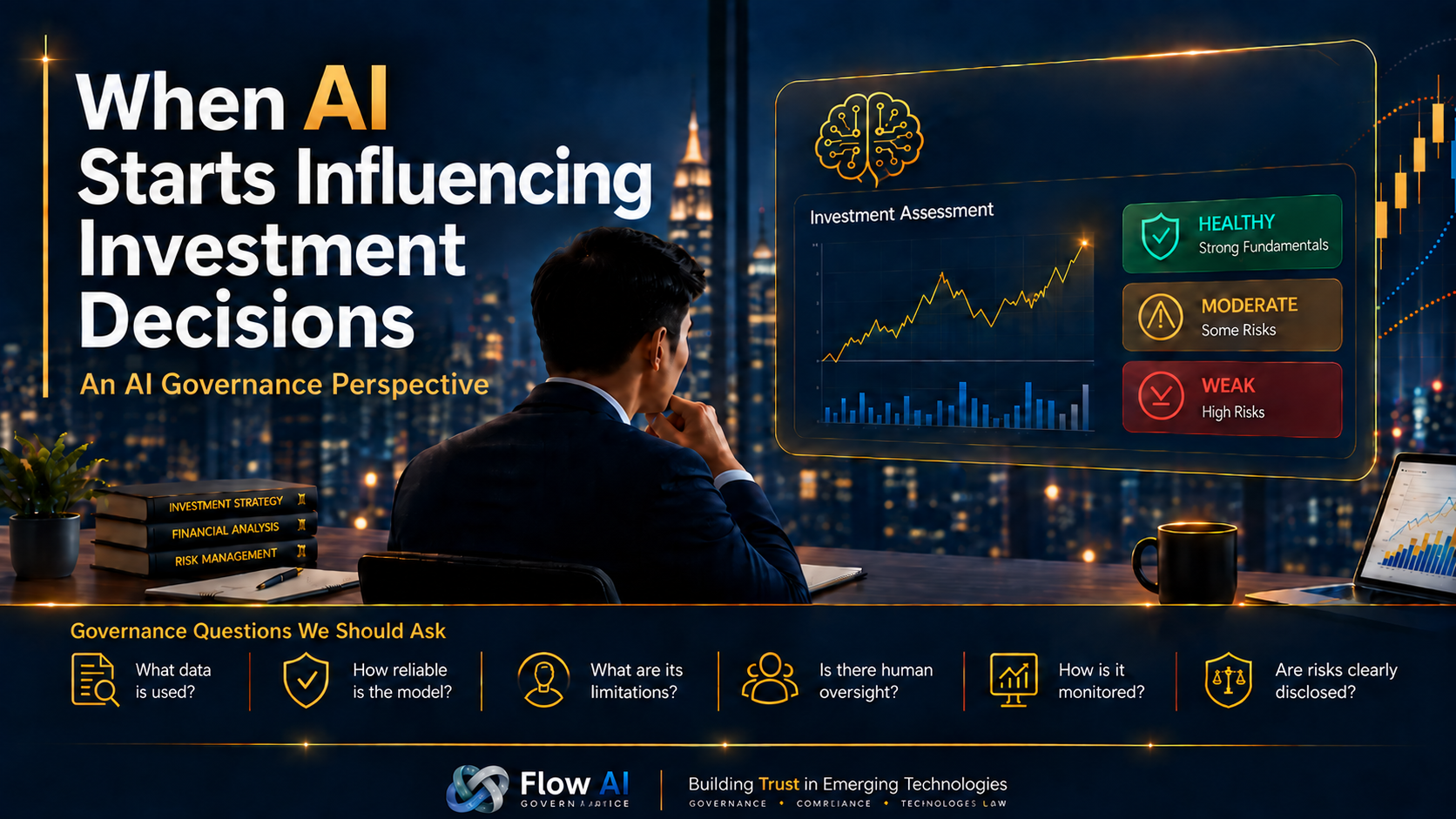
Before deploying AI systems that may influence investment decisions, what governance assessments should organizations perform?
Investment decisions can have significant financial consequences for individuals. As AI becomes increasingly embedded in investment research and decision-support processes, organizations should carefully evaluate not only model performance but also governance considerations such as:
• Transparency of methodology
• Accuracy and validation processes
• Known limitations and assumptions
• Human oversight mechanisms
• Ongoing monitoring and risk management
Frameworks such as the NIST AI Risk Management Framework emphasize that organizations should assess not only what an AI system can do, but also the risks associated with its use and the controls required to manage those risks responsibly.
The more influential an AI system becomes in shaping investment decisions, the more important governance becomes.
The question is no longer:
"Can AI generate investment insights?"
The more important question may be:
"Have we adequately assessed and governed the risks associated with those insights before deployment?"
Trustworthy AI is built not only on capability, but also on accountability, transparency, and responsible oversight.
Watch the full 14-minute episode on YouTube: https://youtu.be/_EkP3PDnsZ0