The Future of AI Governance: Responsible AI Adoption and People Transformation
During the recent HR Tech 2026 conference in Bangkok, one discussion particularly caught my attention.
Several speakers talked seriously about how AI could reshape organizational structures.
One case study described an organization that had already begun planning workforce reductions as AI capabilities continue to improve—considering a reduction of approximately 20% of its workforce over the coming years.
From a business perspective, these conversations are understandable. Organizations naturally seek higher productivity, greater efficiency, and long-term competitiveness.
But from an employee's perspective, the message can sound very different.
When people hear, "AI will replace jobs," they may become hesitant to embrace AI initiatives. Instead of seeing AI as an opportunity, they begin to see it as a threat.
That made me reflect on the role of AI Governance.
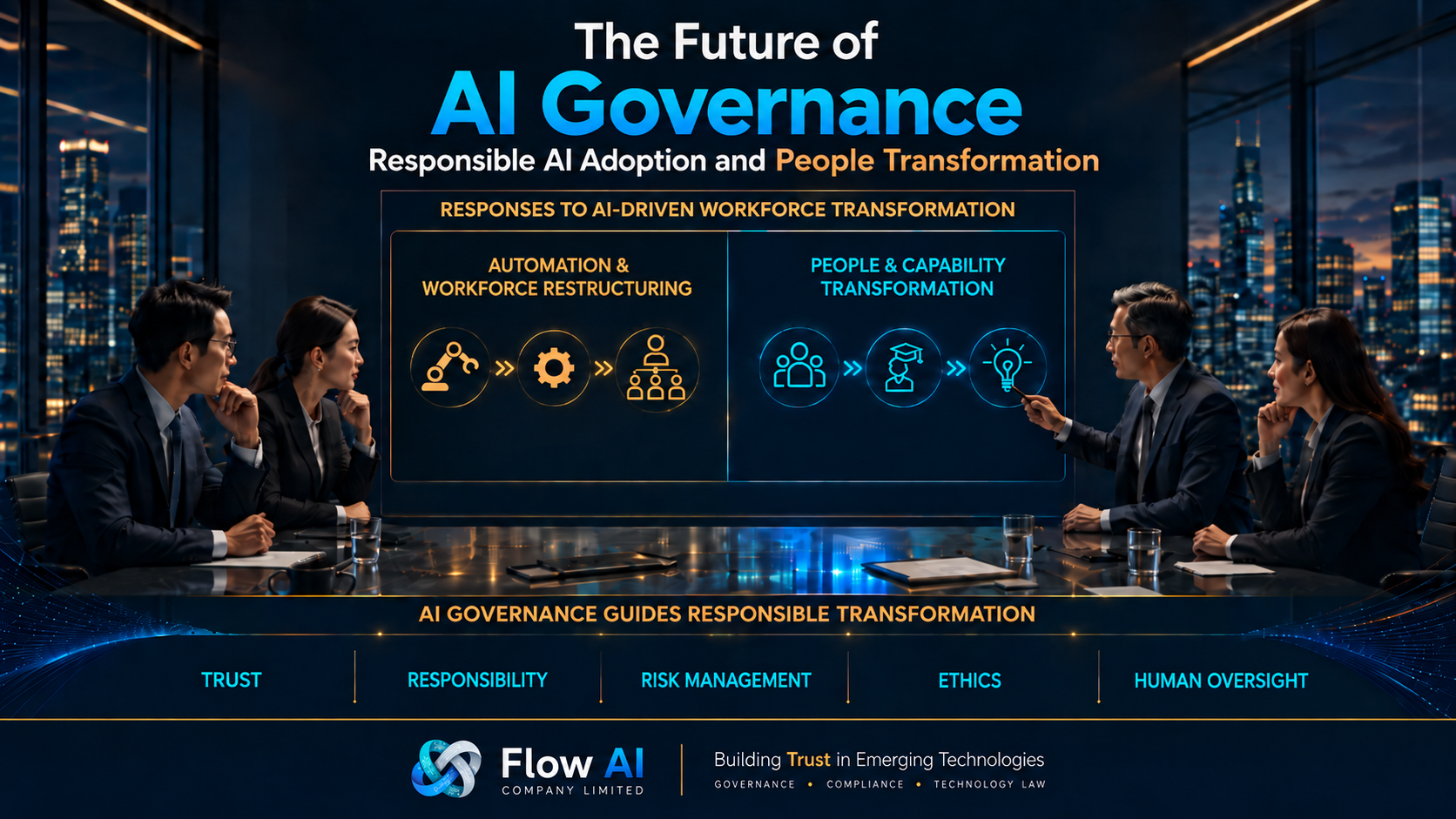
In my view, AI Governance should not be limited to policies, risk management, compliance, or technical controls.
It should also help organizations adopt AI responsibly while giving people a fair opportunity to adapt.
Employees need time to learn.
They need opportunities to develop new skills.
They need confidence that AI is there to augment their capabilities before automating routine tasks.
This also reminded me that workplace technology has always evolved.
Around 30 years ago, typing formal business letters on a typewriter was an essential office skill. When Microsoft Word became widely adopted, employees learned new digital skills and successfully adapted.
Around 20 years ago, knowing how to operate a fax machine was part of everyday office work. As email and OCR technology became mainstream, we learned to scan documents into PDF files and send them electronically instead of using fax machines.
Technology has continued to evolve, and people have continued to adapt.
AI is another major transformation—but perhaps the biggest difference is the speed of change.
That is why organizations should not only invest in AI technologies. They should also invest in helping their people learn, adapt, and grow alongside AI.
The challenge is not whether people can adapt. History has shown that they can. The real challenge is whether organizations are willing to give them the opportunity to do so.
The future of AI Governance is not just about governing AI. It is about enabling responsible AI adoption while empowering people to transform alongside AI.
Because sustainable business growth depends not only on intelligent technology, but also on how responsibly organizations help their people grow with it.