Recent cyberattacks around the world remind us how digital vulnerabilities can lead to financial losses, operational disruption, and harm beyond the digital environment.
While these incidents are not necessarily related to AI agents, they raise a broader question as individuals and organizations increasingly build and deploy their own AI agents.
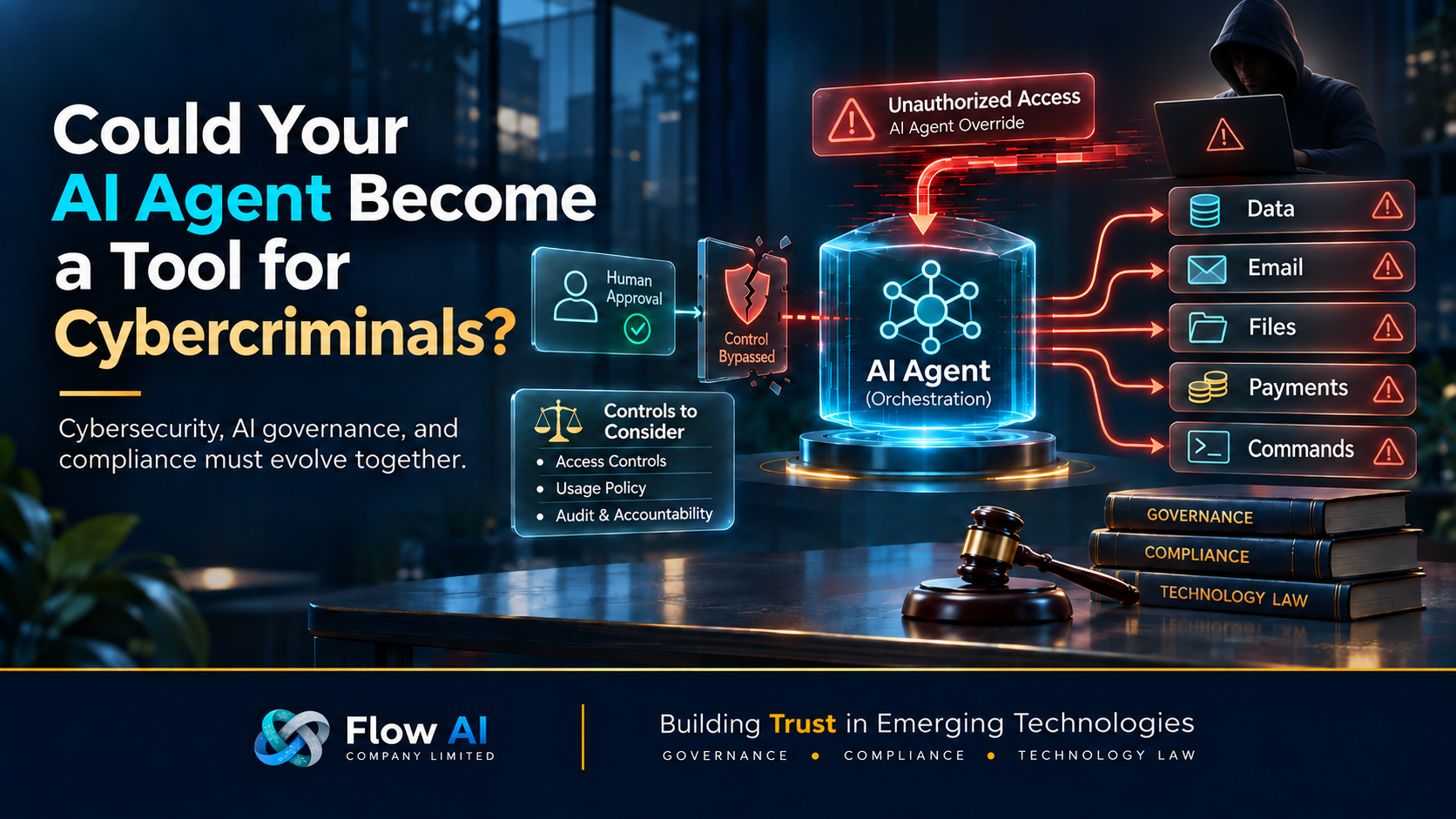
What happens if an attacker gains control over an AI agent that has permission to access sensitive data, execute commands, or perform transactions?
Unlike conventional AI chatbots, AI agents can interact with external systems and take actions on behalf of their users. If compromised or manipulated, they could potentially be misused to extract confidential information, execute unauthorized transactions, or carry out harmful activities.
This concern is particularly relevant to custom-built and self-hosted AI agents, including those running on local hardware, where security controls may not have been adequately designed, tested, or maintained.
Cybersecurity research has already demonstrated how AI agents can be manipulated through techniques such as prompt injection, potentially leading to unauthorized actions and security breaches.
The lesson is not that self-hosted AI agents are inherently unsafe. Nor does using a major AI provider automatically eliminate these risks.
The real question is whether the authority granted to an AI agent is matched by appropriate security controls and governance.
Before deploying an AI agent, individuals and organizations should consider what it can access, what actions it can perform, which decisions require human approval, and how its activities can be monitored or stopped.
As AI agents become more capable, cybersecurity, AI governance, and compliance must evolve together.
Organizations and individuals should also recognize that cyberattacks involving their AI agents may expose them to legal liability, depending on the circumstances and applicable laws. Appropriate governance, security controls, and compliance measures are therefore essential—not only to prevent misuse, but also to demonstrate responsible oversight and help manage potential legal risks.
An AI agent should never have more authority than its owner can effectively control.
For a deeper discussion, please watch the full 11-minute episode on YouTube: https://youtu.be/wsr3h4-vA38