From AI Adoption to AI Governance
I attended Marketing Oops Summit 2026 in Bangkok on 11 July 2026, where one organization shared a simple yet powerful framework for AI adoption on the stage:
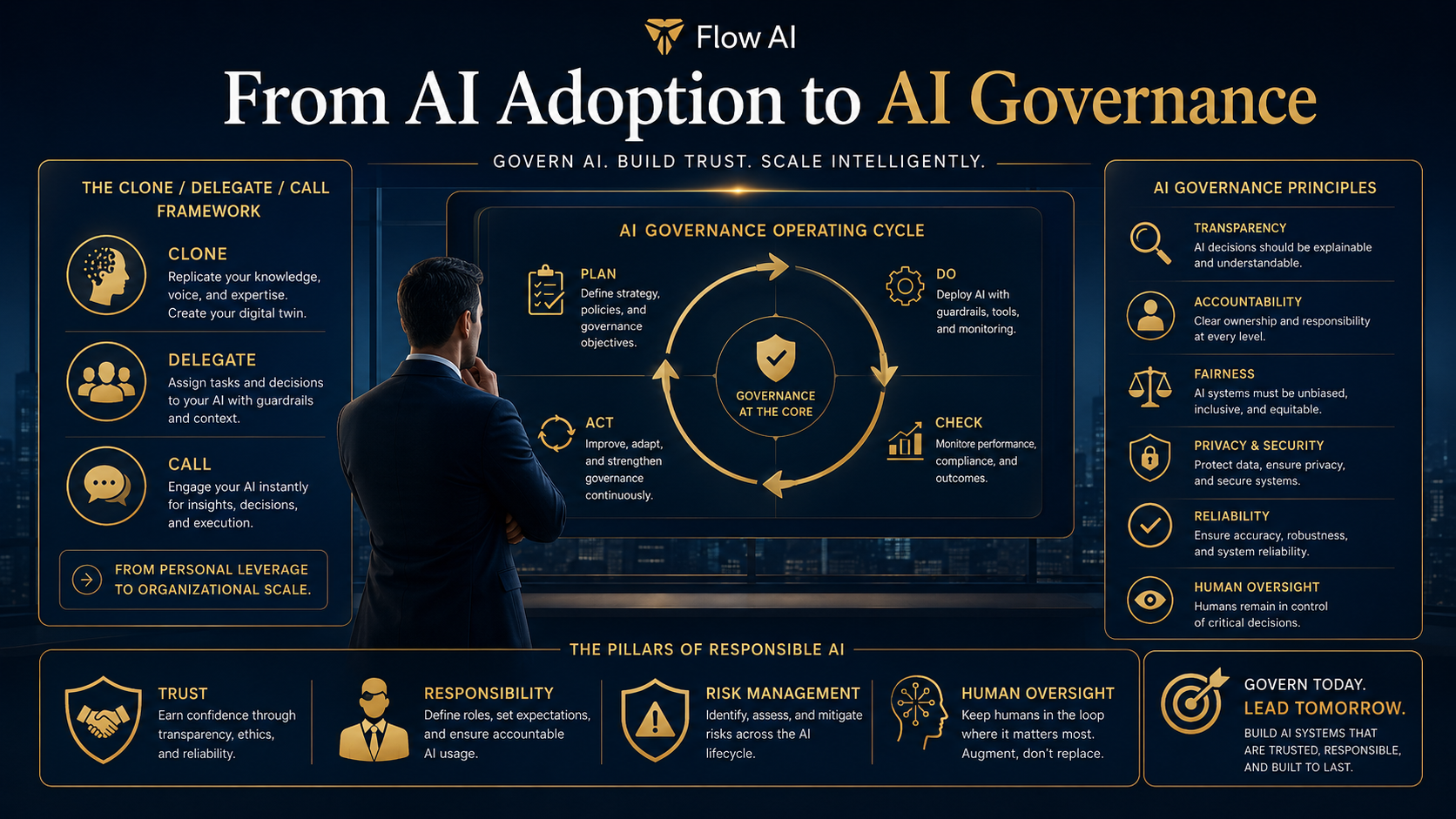
• Clone — Build your signature skills into AI so it can perform routine tasks without you.
• Delegate — Give AI your "second brain" and let routine work flow through automation.
• Call — AI does the preparation, but the final decision remains yours.
What caught my attention was not the technology itself.
It was the governance thinking behind it.
As organizations move from Generative AI to Agentic AI, the critical question is no longer:
"What can AI do?"
The more important question becomes:
"What should AI do, and what should remain a human responsibility?"
This is where AI Governance begins.
Because trustworthy AI is not only about capability.
It is also about accountability.
The framework also reminded me of the continuous improvement mindset behind ISO/IEC 42001 and its Plan-Do-Check-Act (PDCA) cycle.
Organizations identify where AI can create value, deploy it into business processes, maintain human oversight where accountability matters, and continuously improve based on lessons learned.
In many ways, AI Governance is not about restricting AI.
It is about defining the right balance between automation, human judgment, and accountability.
Technology will continue to evolve.
Agentic AI capabilities will become more powerful.
This also reminded me of my own journey with AI.
Around ten years ago, I was excited to use Artificial Narrow Intelligence (ANI) applications such as Google Maps.
For the first time, I could easily navigate to places I had never visited before.
Years later, I felt that same excitement again when advanced generative AI tools such as ChatGPT enabled me to discuss complex topics, learn faster, and explore ideas in ways that were previously impossible.
Today, AI is evolving even further.
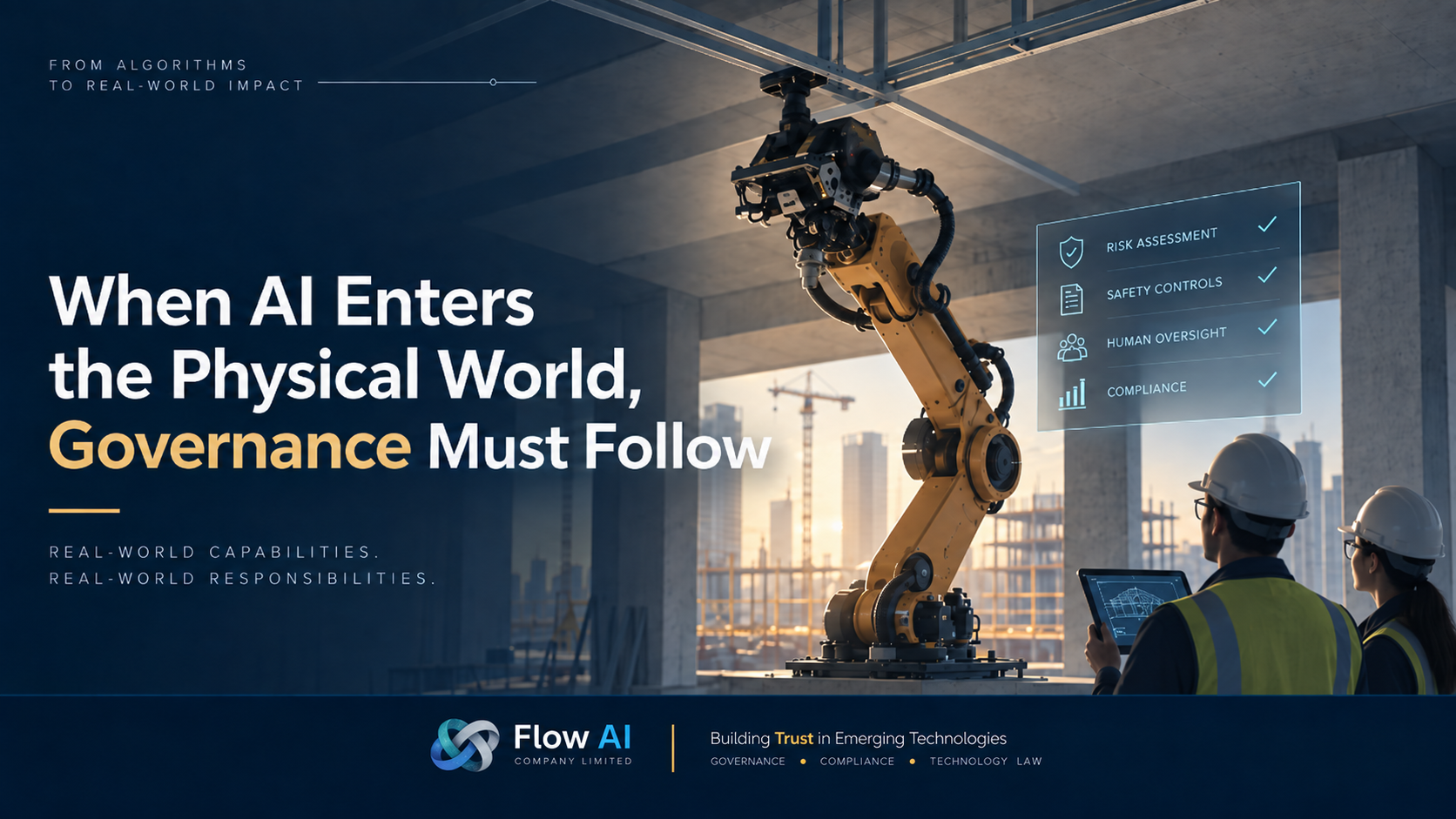
Agentic AI systems are beginning to plan, reason, and take actions with increasing levels of autonomy.
The opportunities are enormous.
But so are the risks.
The more capable AI becomes, the more important governance becomes.
Perhaps this is one of the key lessons from the Clone, Delegate, Call framework.
Not everything that AI can do should be delegated to AI.
Organizations must consciously decide where automation creates value, where human oversight is required, and where accountability must remain firmly in human hands.
Because while AI can assist decision-making, accountability ultimately remains human.