What Should an Enterprise AI Contract Actually Protect?
Imagine a company adopting an AI service. The technology meets its requirements, the pricing is acceptable, and the vendor provides its standard agreement.
But what happens if the provider changes the AI model, uses company data for an unexpected purpose, or cannot assist when a serious incident occurs?
An enterprise AI contract should do more than define services, fees, and liability limits. It should allocate risks according to each party’s role, control, and ability to manage them.
Under Thailand’s Personal Data Protection Act (PDPA), where a data controller engages a processor to process personal data on its behalf, the controller must put in place an agreement governing the processor’s activities. But such an agreement does not address every AI-related commercial and operational risk.
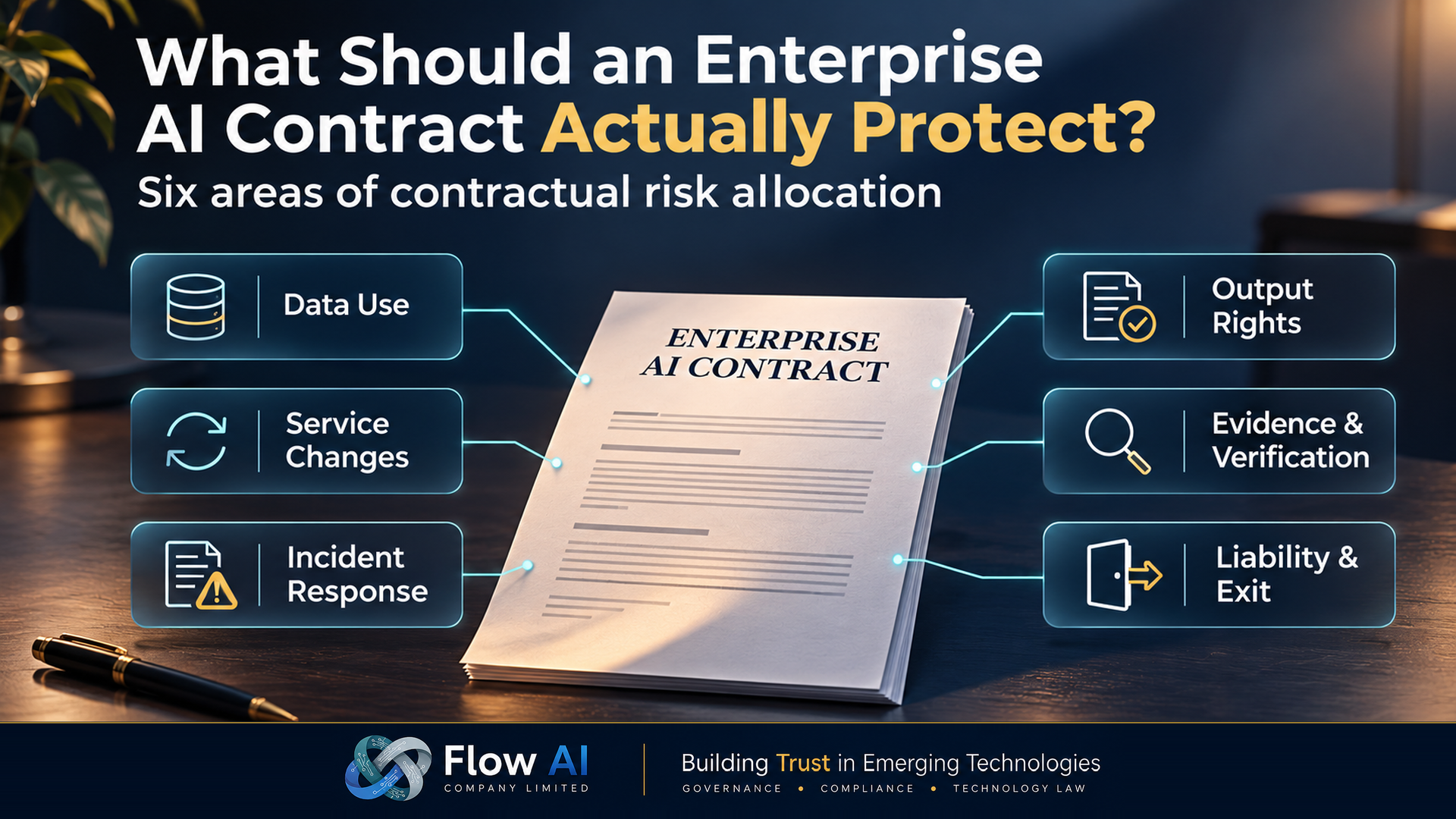
Six areas deserve attention:
1. Data use — Define permitted processing, retention, confidentiality, and whether data may be used for model training.
2. Service changes — Establish notice requirements for material changes, opportunities to reassess risks, and protections when AI capabilities or agent permissions change.
3. Incident response — Specify reporting, escalation, access to records, and cooperation during investigations.
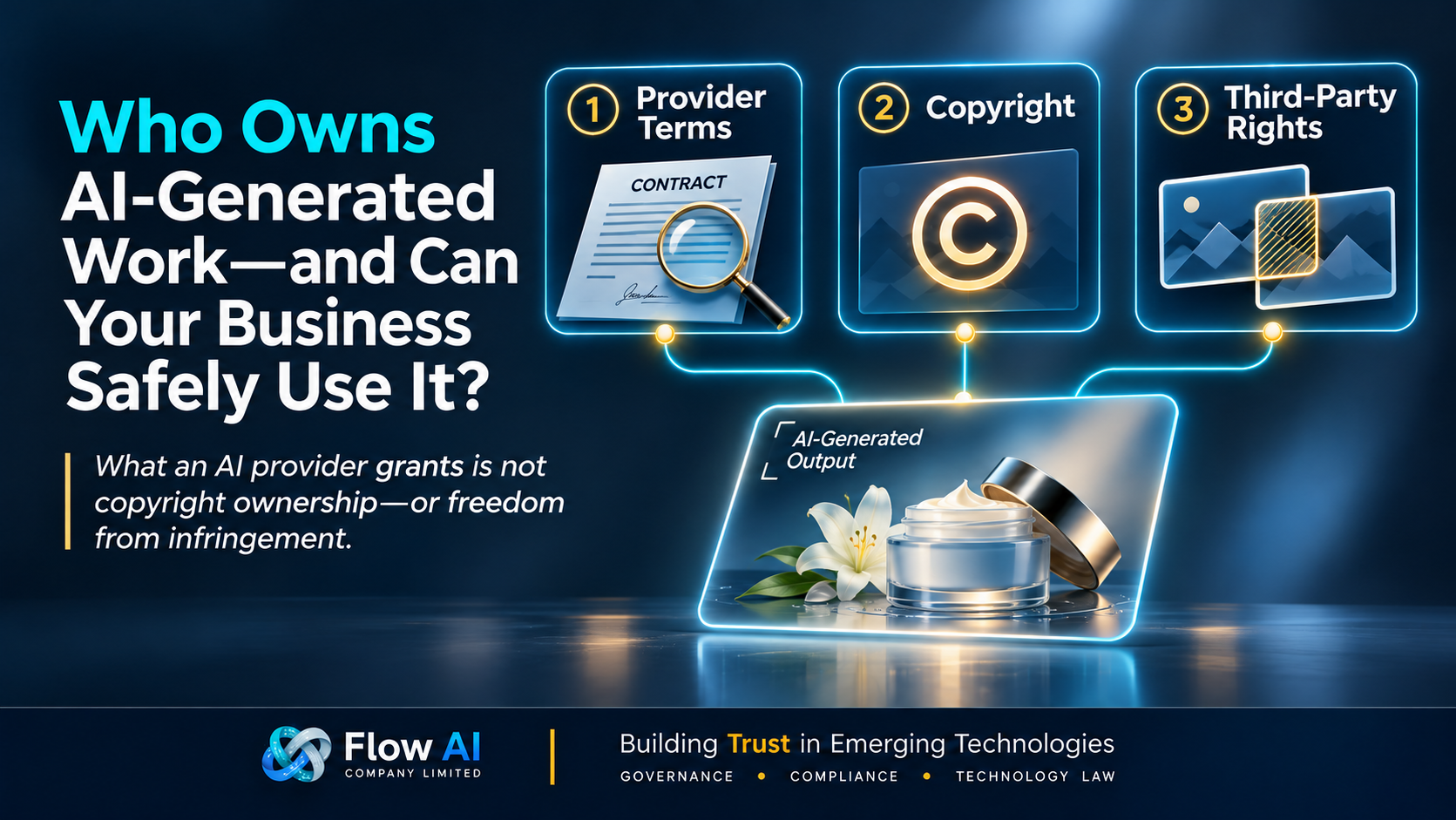
4. Output rights — Clarify permitted uses of AI-generated outputs, third-party claims, warranties, and indemnities. Contractual permission does not automatically establish copyright ownership.
5. Evidence and verification — Establish proportionate rights to obtain documentation, assurance reports, and information needed to investigate failures or challenged decisions.
6. Liability and exit — Examine liability caps, remedies, termination, data retrieval, transition assistance, governing law, and dispute resolution.
An internal brainstorming tool presents different risks from an AI system supporting essential customer operations.
Before signing, management should ask:
• Which risks are we accepting?
• Which risks require explicit contractual protection?
• What can we do if those protections fail?
The objective is not to transfer every risk to the vendor, but to establish a workable allocation of rights, responsibilities, and remedies.
Legal context as at 29 October 2026.
For a deeper discussion, please watch the full 10-minute episode on YouTube: https://youtu.be/6erzk-GW4Bw