Imagine a company using generative AI to create advertising images, product descriptions, or brand materials.
The AI provider's terms say the customer owns the output. Does that mean the business automatically holds copyright, can license the work, or prevent competitors from copying it?
Not necessarily.
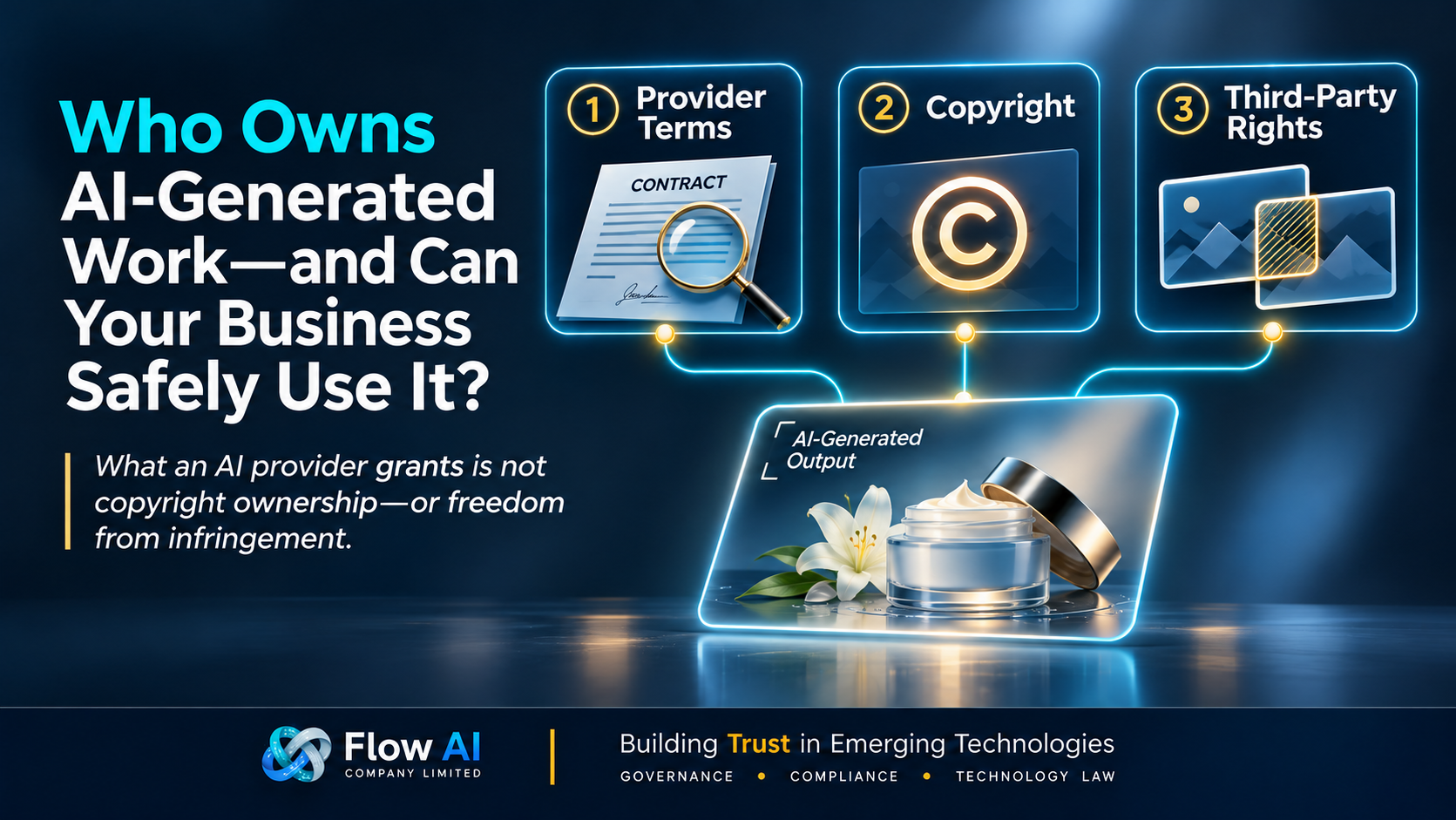
Three separate legal questions deserve attention.
1. What rights does the AI provider actually grant?
A provider's output-ownership clause establishes contractual rights, subject to applicable law and conditions.
But it does not automatically create copyright, transfer third-party rights, or guarantee exclusivity. Other users may receive similar AI-generated outputs.
2. Does copyright exist—and who owns it?
Thai copyright law does not specifically resolve whether autonomously AI-generated material qualifies for copyright protection.
Human creative contribution may be important, but simply operating an AI system or paying for its services does not establish copyright ownership.
Even where copyright exists, ownership may differ between employee-created and commissioned works, depending on applicable law and agreements.
The U.S. Copyright Office has similarly distinguished human-authored AI-assisted works from expression generated without sufficient human creative control. Its analysis concerns U.S. law, not Thailand.
3. Could the output infringe someone else's rights?
Permission from an AI provider does not guarantee freedom from third-party copyright claims.
An output that reproduces protected expression may create infringement risks, depending on the circumstances and applicable legal exceptions.
What should businesses do?
Before using AI-generated content commercially, organizations should:
-
Review the provider's output rights and limitations.
-
Document identifiable human creative contributions and ownership arrangements.
-
Assess potential third-party rights, particularly for valuable branding, marketing, or licensable content.
The central lesson: Permission to use AI-generated content is not the same as copyright ownership—or freedom from infringement.
Responsible commercial use begins with understanding these distinctions before AI-generated materials become valuable business assets.
For a deeper discussion, please watch the full 13-minute episode on YouTube: https://youtu.be/HNcoL1UHAxU