Can People Challenge an AI-Assisted Decision? What Thai and EU Law Provide
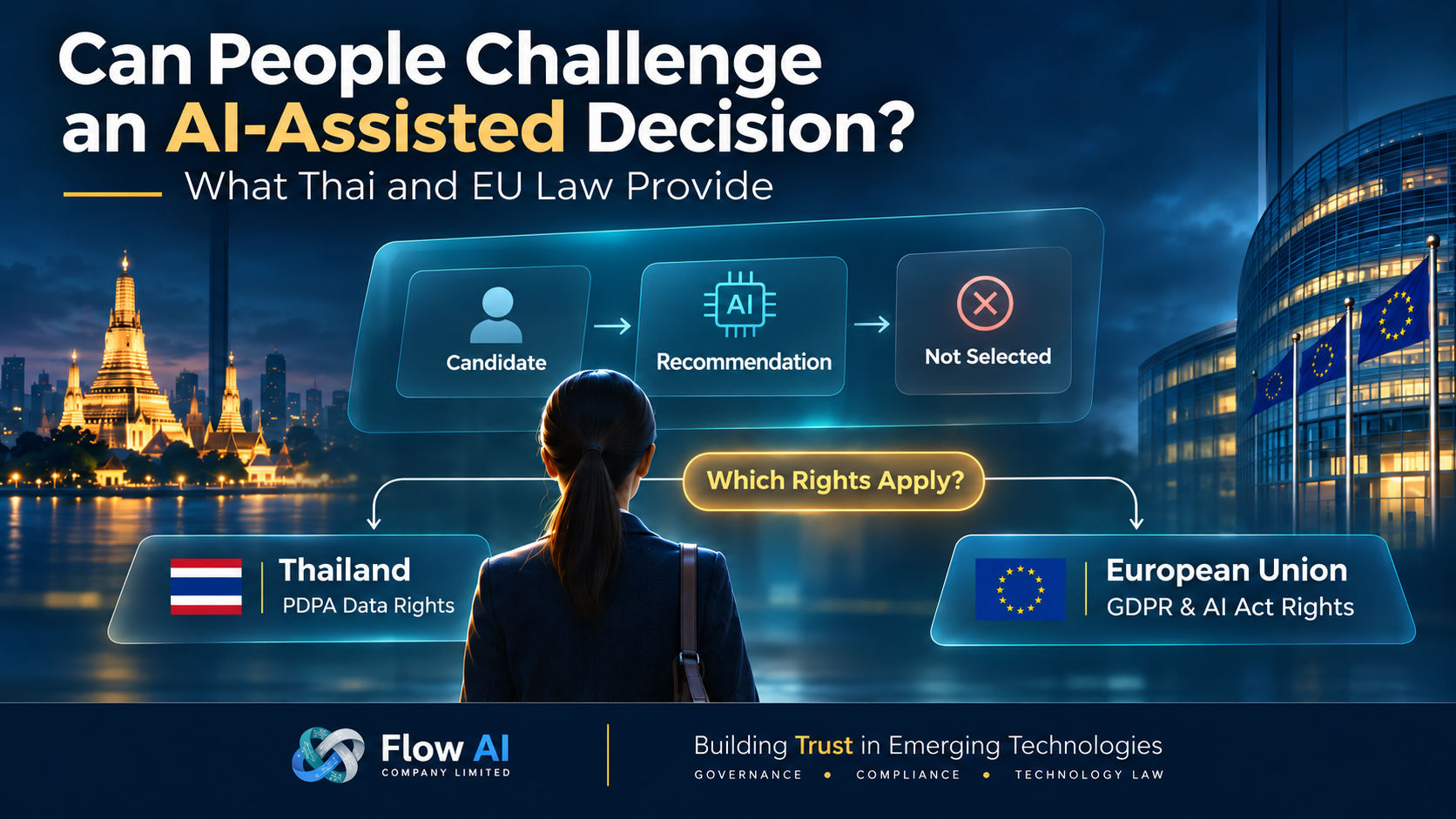
Imagine applying for a job and being rejected after an AI system evaluates your application. You suspect it used an incorrect employment record.
Can you challenge the decision?
Sometimes—but not simply because AI was involved.
Thailand
The Personal Data Protection Act (PDPA) provides rights to access personal data, request correction of inaccurate information, object to processing in specified circumstances, and lodge complaints about suspected PDPA violations.
However, the PDPA does not establish a general right to contest a decision solely because AI contributed to it. Other applicable laws may provide additional protections.
European Union
The GDPR generally prohibits solely automated decisions that produce legal or similarly significant effects, subject to exceptions. Certain permitted decisions must include safeguards such as human intervention and the ability to contest the outcome.
The EU AI Act introduces a separate, conditional right to an explanation for certain significant decisions based on qualifying high-risk AI systems, potentially including decisions involving human judgment.
Following the Digital Omnibus on AI, the main high-risk rules for listed uses such as recruitment, including the rules that classify these systems, apply from 2 December 2027.
The explanation provision itself was not postponed, but because it depends on that classification, how it applies during the transition remains uncertain.
An explanation does not itself guarantee the decision will be overturned.
For businesses, four questions matter:
• Which jurisdiction's laws apply?
• What role did AI actually play in the decision?
• How significantly was the individual affected?
• What specific legal right or remedy is being sought?
Access to personal data, an explanation, human intervention, and contesting a decision are distinct legal protections—not interchangeable rights.
What matters is how the decision was reached, its consequences, and which legal protections apply.
Legal research as of 16 November 2026.
For a deeper discussion, please watch the full 10-minute episode on YouTube: https://youtu.be/1RTj8kHNhLM