Data Sovereignty Is Becoming a Strategic AI Governance Issue
After attending the discussion on AI, sustainability, and digital infrastructure at EARTH JUMP 2026, one message stood out clearly to me.
The future of AI is no longer determined solely by more powerful models.
It will increasingly be shaped by trusted infrastructure, resilient energy systems, responsible water management, secure data governance, and effective legal frameworks.
As both a lawyer and an AI Governance practitioner, I believe Thailand should place greater strategic importance on Data Sovereignty.
This does not mean restricting innovation or discouraging foreign investment.
On the contrary, welcoming global investment in hyperscale data centers is a practical and necessary step. Building world-class digital infrastructure requires substantial capital, advanced technology, operational expertise, and global experience that Thailand can benefit from.
However, investment alone is not enough.
If data centers are becoming strategic national infrastructure, Thailand also needs a clear and transparent governance framework to ensure that this infrastructure supports long-term national interests.
Such a framework should address several critical areas:
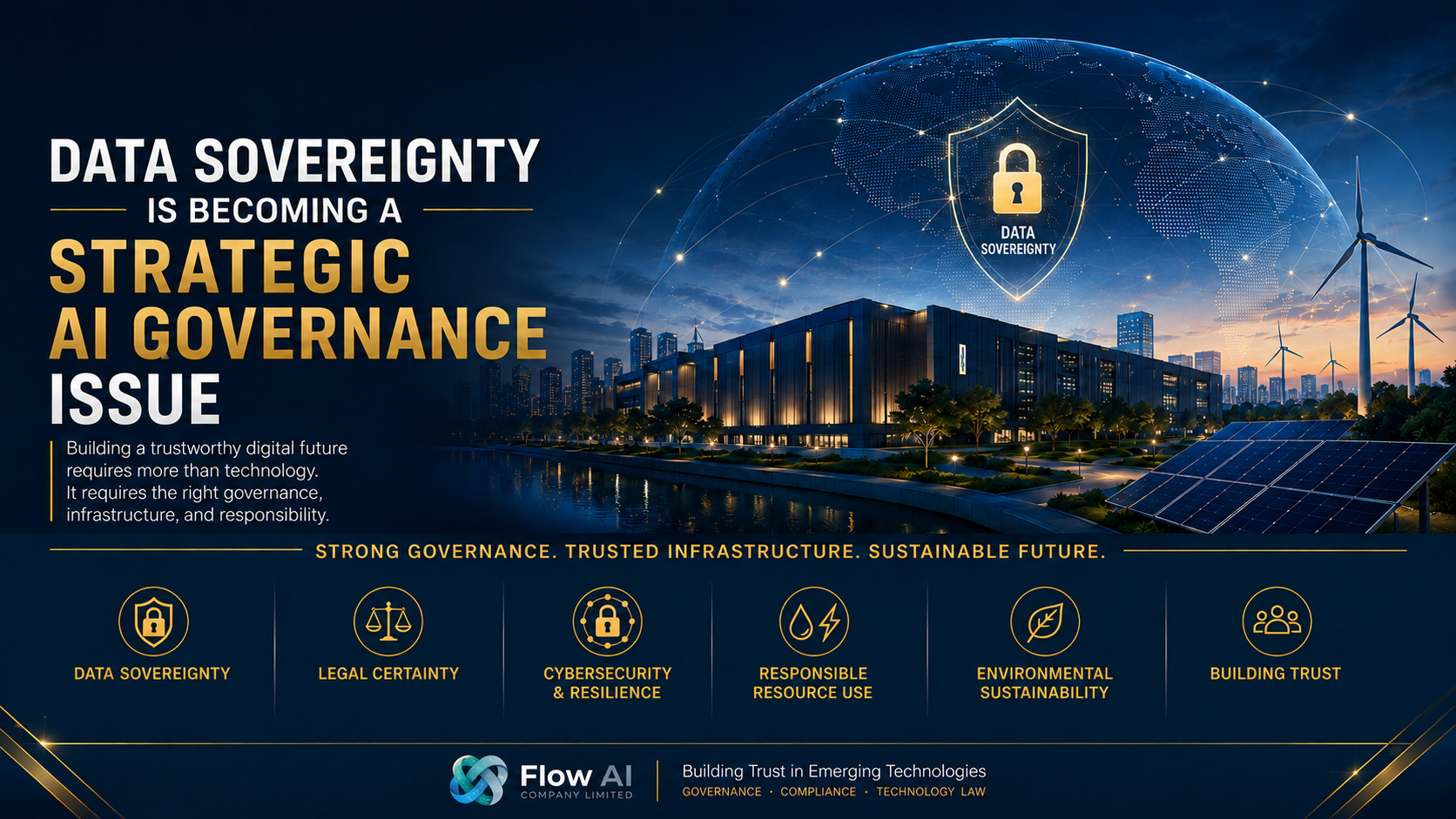
Data Sovereignty — ensuring that strategically important data is protected and governed appropriately.
Legal certainty — providing clear rules for data center operators, cloud service providers, and enterprise users.
Cybersecurity and resilience — protecting critical digital infrastructure from operational and security risks.
Responsible resource use — managing electricity and water consumption with transparency and measurable standards.
Environmental sustainability — ensuring that digital infrastructure growth is aligned with Thailand’s sustainability commitments.
These are not barriers to investment.
They are foundations of trust.
Data Sovereignty is increasingly appearing as a key topic in international AI and digital governance discussions, reflecting its growing strategic importance.
Many countries are now recognizing that data centers are more than commercial facilities. They are part of the infrastructure supporting AI, digital economies, national resilience, and future innovation.
Thailand has an opportunity to build on this momentum.
The right approach is not to choose between innovation and regulation.
It is to design governance that enables investment, protects national interests, and builds public trust at the same time.
In my view, this is what responsible AI Governance should look like.
It begins long before an AI model is deployed.
It begins with the infrastructure, data, legal frameworks, and sustainability standards that make AI trustworthy in the first place.
For a deeper discussion, please watch the full 16-minute episode on YouTube: https://youtu.be/rMX6MQ6CvCY