Who Actually Owns AI Compliance?
When something goes wrong with an AI system, who is accountable—Legal? Compliance? Or the team that deployed it?
Too often, the default answer is “Compliance.” That may seem logical. AI creates regulatory, privacy, operational, and reputational risk. But handing overall ownership to one control function creates a real governance weakness.
Legal and Compliance cannot own every operational risk created by how the business uses AI.
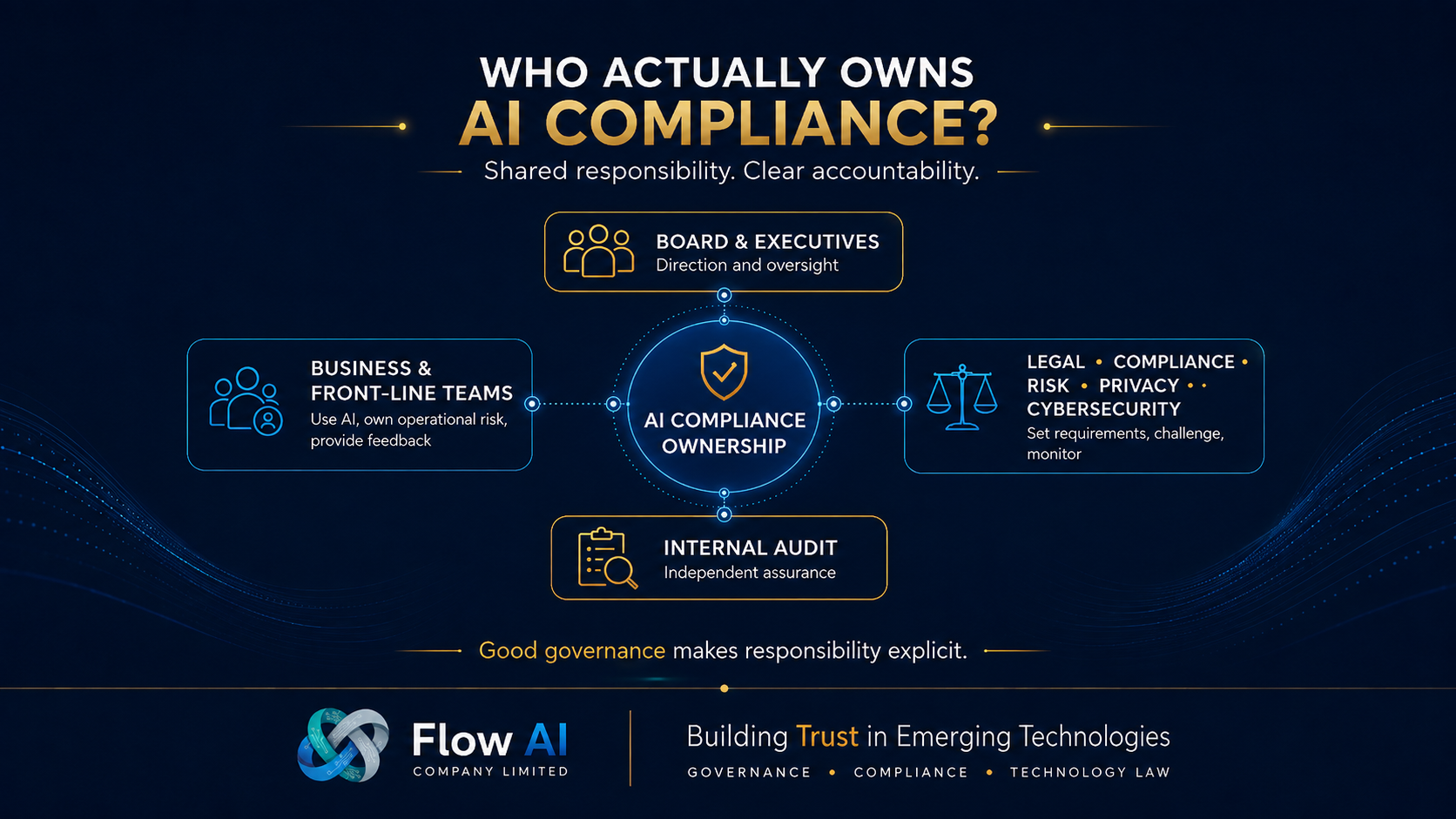
The function selecting, deploying, or relying on an AI system should remain accountable for the purpose of that use case, the decisions it supports, and the consequences it creates.
Front-line teams are essential here. They see how AI is actually used, where processes break, and what risks emerge in daily operations. Their role should go beyond following instructions. They should help review controls, flag weaknesses, and recommend improvements based on what they observe.
Legal, Compliance, Risk, Privacy, and Cybersecurity still play a critical role: setting requirements, challenging assumptions, and monitoring whether controls remain effective. But their oversight is only as strong as the feedback loop from the business.
This reflects the basic logic of the Three Lines Model: management owns and manages risk, oversight functions provide expertise and challenge, and Internal Audit provides independent assurance. The exact allocation should still fit each organization and each use case.
The real test is not “who is responsible for AI” in the abstract. It is whether the organization can answer, specifically:
→ Who approves the use case?
→ Who owns the operational risk?
→ Who monitors the controls?
→ Who challenges the decision?
→ Who can pause or stop the system?
AI-related failures can move faster and spread more widely than many traditional operational failures—across systems, customers, employees, and processes.
That is exactly why shared ownership, clearly defined, matters more than ever.
Good governance does not dilute responsibility. It makes responsibility explicit—and keeps relevant functions connected as the organization learns from real use.
In your organization, is this clearly defined—or does responsibility default to Compliance by habit?